Slatted timber and stone-effect panels: creating a feature wall that lasts
Slats and stone-effect panels are two of the most popular finishes for media walls and feature walls. How they differ, how to combine them, and the details that make them look built in.
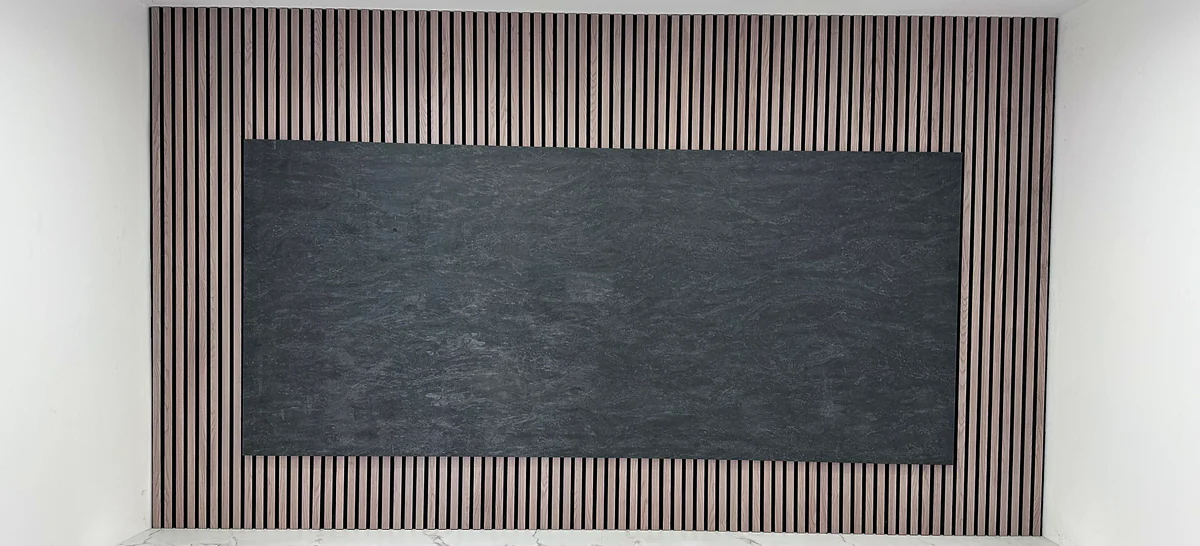
A feature wall can change the character of a room in a day. Slatted timber and stone-effect panels are the two finishes we’re asked for most, often on the same wall. Both look striking, but they do quite different things.
Slatted timber
Vertical slats bring warmth, texture and rhythm. They make a ceiling feel taller, catch light and shadow beautifully, and suit both modern and more traditional rooms.
- Spacing: narrow gaps feel refined and calm; wider gaps feel bolder and more graphic.
- Finish: oak and walnut feel warm and natural; black or dark slats feel dramatic.
- Acoustic panels: slats mounted on a felt backing absorb sound and reduce echo — very useful in rooms with hard floors and large windows.
- Lighting: a concealed strip at the top grazes light down the slats in the evening.
Stone, marble and concrete effects
Stone-effect panels give the look of slate, marble, travertine or concrete with a fraction of the weight and cost of real stone. They bring a sense of calm and solidity, and large panels with few joins feel especially luxurious. Behind a TV or around a fire, a stone-effect surround gives the wall a strong focal point.
Combining the two
The most successful combinations let one finish lead. A stone-effect panel framed by slatted timber either side, or a slatted wall with a stone panel set into the centre for the TV, both look considered. Repeat one of the colours elsewhere in the room — in a console, shelving or the floor — so the wall feels connected to the space.
Line it all up. Slats, panel edges, the TV, shelves and the console should all align. A designer will set them out to the millimetre so the joins fall in the right places and the wall looks intentional.
Planning around the TV
If the wall will hold a screen, decide its size and height first. The fixings need solid backing behind the panels, and the cables need a route inside the wall to the console or a cupboard. Slatted sections can hide speakers, sensors and access panels behind removable slats.
Practical details
- Check the wall is flat; uneven walls may need a frame behind the panels.
- Leave access to sockets, switches and any services behind.
- Think about how the edges finish against the ceiling, floor and corners.
- Choose finishes that are easy to dust and wipe, especially in family rooms.
Chosen well and set out carefully, a slatted or stone-effect wall becomes a lasting part of the room’s architecture — not just a trend applied to the surface.
Keep reading
-
 Media Walls
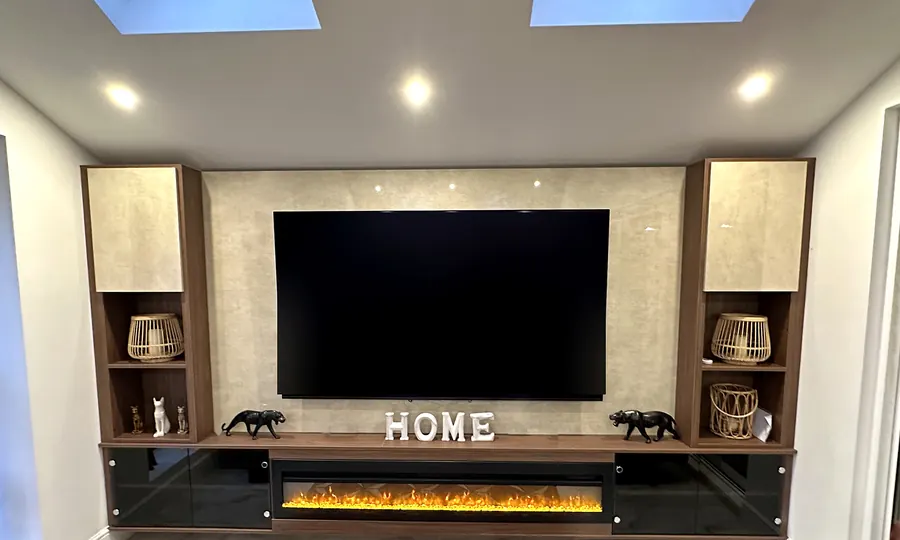
Planning a media wall: TV size, viewing height, fires and cables
A media wall should make a living room calmer, not busier. The measurements, electrics and fire details to settle before choosing finishes.
4 min read Read article -
 Media Walls
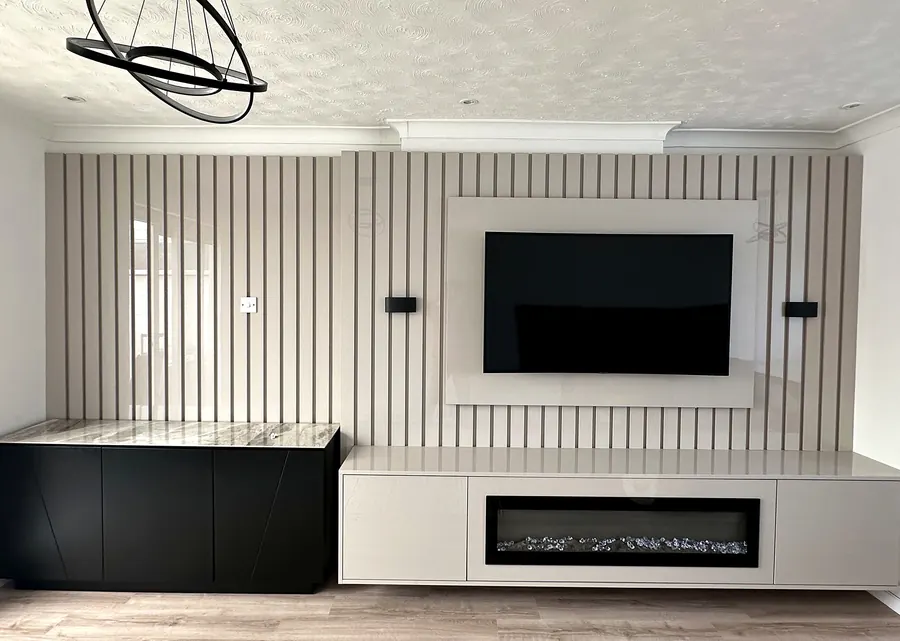
Slats, stone or lit shelving: choosing a media wall finish
Once the layout is fixed, the finish sets the mood. How timber slats, stone effects, paint and lighting compare on a media wall.
4 min read Read article -
 Media Walls
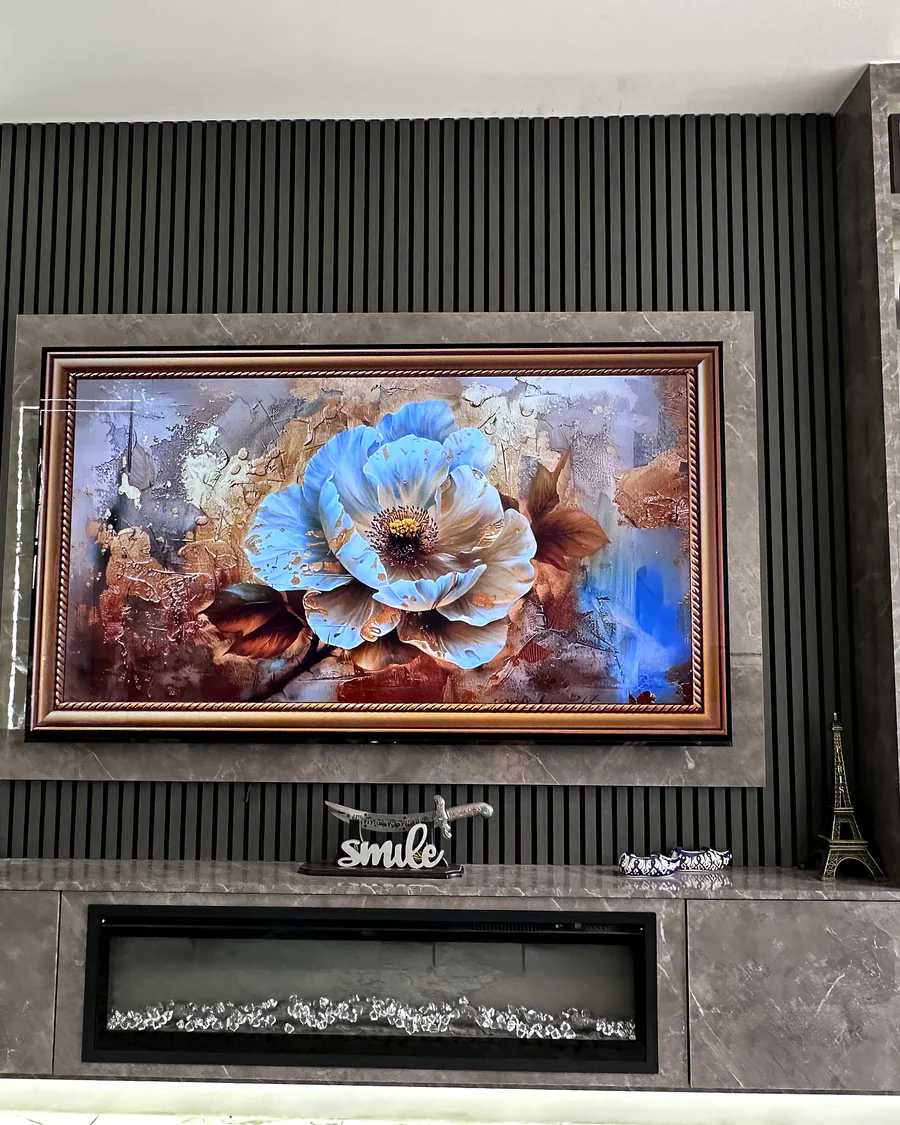
Electric fires in media walls: what to know before you choose
A built-in fire makes a media wall the warm heart of the room. How to choose the fire, where to place it and what it needs behind the scenes.
4 min read Read article