Slats, stone or lit shelving: choosing a media wall finish
Once the layout is fixed, the finish decides the mood. How the most popular media wall finishes compare — and how to combine them without the wall feeling busy.
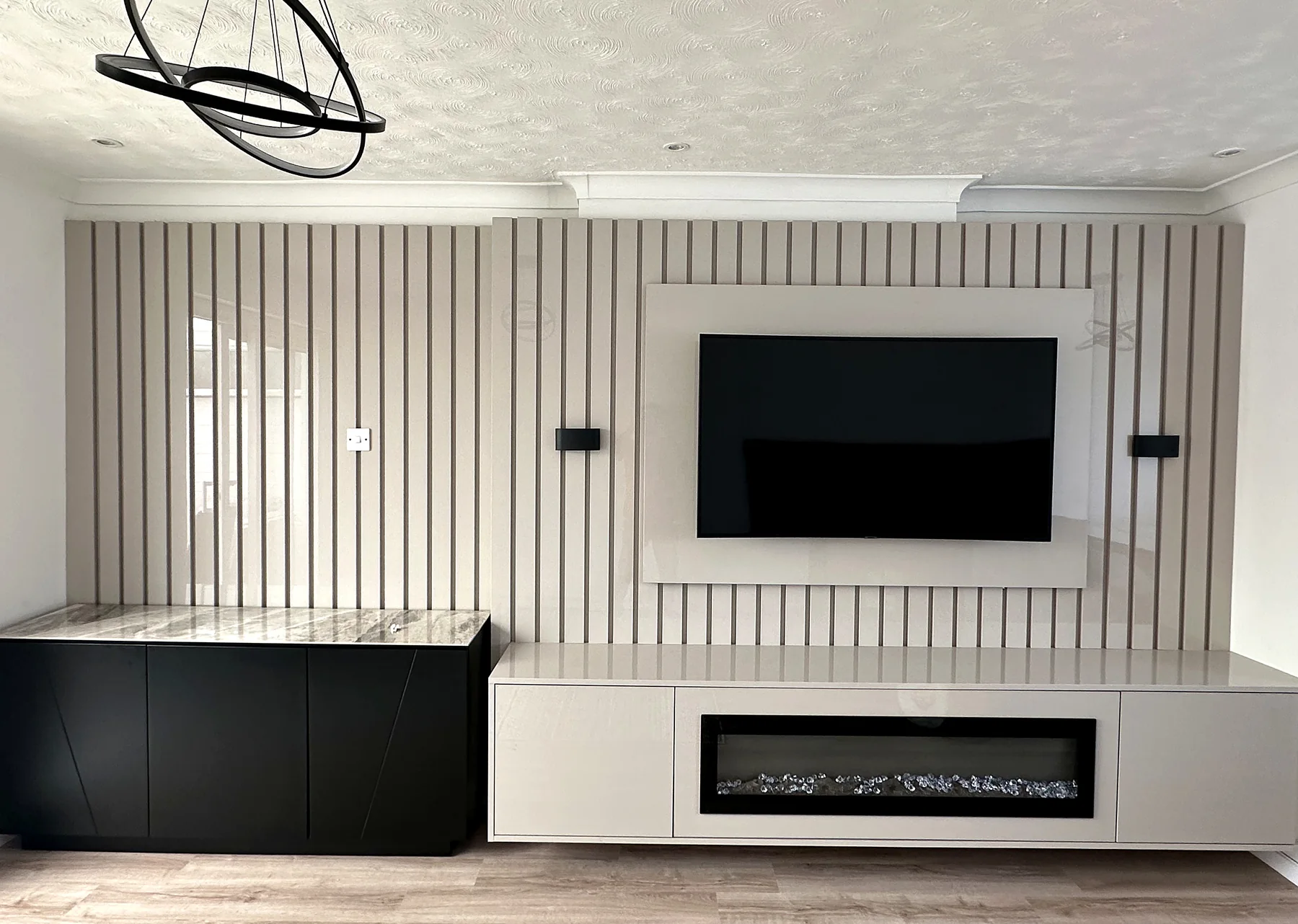
A media wall is often the largest single surface in a living room, so its finish shapes how the whole room feels. Here are the most popular options, what each brings, and how to combine them so the wall feels rich rather than busy.
Timber slats
Vertical slatted panels are one of the most popular finishes for media walls, and for good reason. They add texture and rhythm, draw the eye upwards so ceilings feel higher, and bring warmth to the room. Slats can be real timber veneer, painted, or mounted on an acoustic felt backing that helps soften echo in rooms with hard floors.
Choose the spacing to suit the room: narrow gaps feel refined, wider ones feel bolder. Walnut and oak tones create warmth; black or charcoal slats look dramatic behind a screen.
Stone, marble and textured panels
A stone or marble-effect panel behind the TV creates an instant focal point and pairs beautifully with a fire. Large-format porcelain, sintered stone and textured panels give the look of natural stone with less weight and simpler installation. Microcement and limewash-effect finishes offer a softer, more organic texture.
Keep the stone to the central feature — framing the TV and fire — and let the side units stay calmer, so the material has room to breathe.
Painted panels
A smooth painted finish is the most understated option. Matching the media wall to the wall colour makes it feel part of the architecture, which suits smaller rooms and period homes. A deeper contrasting colour — navy, forest green or charcoal — makes the TV recede when it’s switched off, because a black screen almost disappears against a dark background.
Open shelving and display
Shelves either side of the TV soften the wall and give a home to books, plants and objects; glass-fronted cabinets keep collections dust-free. Display works best in balance — too many open shelves soon look cluttered, so mix them with closed cupboards.
Lighting is part of the finish
Lighting can transform any material:
- Backlighting behind the TV or a floating panel creates a soft halo and eases eye strain in a dark room.
- Strips along slats or in shelf recesses pick out texture and add depth.
- Downlights recessed into a bulkhead wash light down over stone or timber.
- Dimmers and warm white light keep the effect cosy rather than commercial.
Judge samples together. Gather samples of every material — slats, stone, paint, even the TV’s black glass — and look at them in your living room in the evening, under the lights you plan to use.
Combining finishes
Most successful media walls use two or three finishes at most: one feature material, one calm supporting finish and one accent. For example, a stone panel behind the TV, painted cupboards either side and walnut shelves with integrated lighting. Repeat colours from elsewhere in the room — the floor, the sofa, the cushions — so the wall feels connected to the space around it.
The right finish turns a practical TV wall into the heart of the room. Choose one feature material, support it with calm finishes, and let the lighting bring out the texture.
Keep reading
-
 Media Walls
Planning a media wall: TV size, viewing height, fires and cables
A media wall should make a living room calmer, not busier. The measurements, electrics and fire details to settle before choosing finishes.
4 min read Read article -
 Media Walls
Electric fires in media walls: what to know before you choose
A built-in fire makes a media wall the warm heart of the room. How to choose the fire, where to place it and what it needs behind the scenes.
4 min read Read article -
 Media Walls
Media wall or TV unit? How to choose for your living room
A TV unit is quick and flexible; a media wall hides every cable and becomes part of the room. How to decide which suits your space.
4 min read Read article