Media wall or TV unit? How to choose for your living room
A freestanding TV unit is quick and flexible; a media wall is built in, hides every cable and becomes part of the room. How to decide which is right for your space and the way you watch.
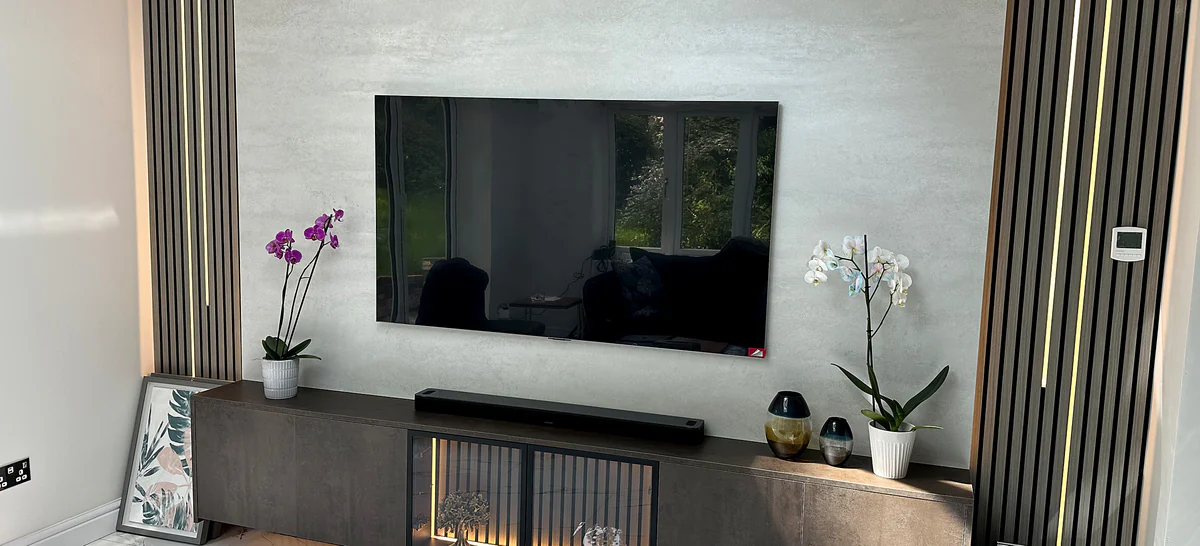
The television is in almost every living room, and how it’s housed makes a big difference to how the room looks. The choice usually comes down to two approaches: a freestanding TV unit, or a media wall built into the room. Both can look good — they just suit different homes.
The freestanding TV unit
A TV unit is a piece of furniture you buy or have made, with the screen on top or on the wall above. It’s quick to install, can move to a new house with you, and leaves the wall itself untouched. The downside is cables: there’s usually a tangle running down the wall and behind the unit, and the TV can look like an object placed in the room rather than part of it.
The media wall
A media wall is a built-in piece of joinery that frames the TV. The screen sits in a recess or on a panel, every cable runs inside the wall, and equipment lives in ventilated cupboards. It can include a fire, shelving, display niches, a soundbar recess and lighting — so the whole wall becomes the room’s focal point, with or without the screen on.
How they compare
- Cables: a TV unit hides some; a media wall hides all of them.
- Storage: both can store well, but a media wall uses the full height and width of the wall.
- Fire and lighting: easy to build into a media wall; harder with a unit.
- Flexibility: a TV unit can move rooms or houses; a media wall is designed for one space.
- Impact: a media wall transforms a room; a TV unit fits into it.
The middle ground. A floating built-in console with a panelled or slatted section behind the TV hides the cables and looks built in, without the scale of a full media wall. It suits smaller rooms and tighter budgets well.
Which suits your room?
A full media wall makes most sense when the TV is the natural focus of the room, when you plan to stay for several years, and when you’d like a fire or display shelving as part of the design. In a room where the screen should be discreet — a formal sitting room, or an open-plan space where it’s one zone among several — a lower console or a cabinet that hides the TV may be better.
Questions to ask yourself
- How big is the screen, and how far away do you sit?
- Do you want a fire, and does the room need the warmth or just the glow?
- What equipment needs to be stored and connected?
- How should the wall look when the TV is off?
Whichever you choose, plan the cables, power and viewing height first. Get those right, and the TV will sit comfortably in the room for years.
Keep reading
-
 Media Walls
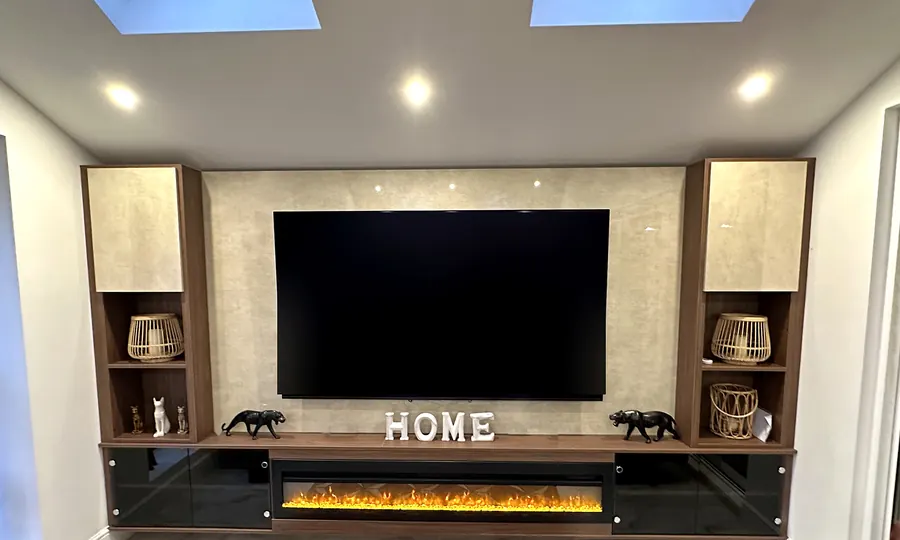
Planning a media wall: TV size, viewing height, fires and cables
A media wall should make a living room calmer, not busier. The measurements, electrics and fire details to settle before choosing finishes.
4 min read Read article -
 Media Walls
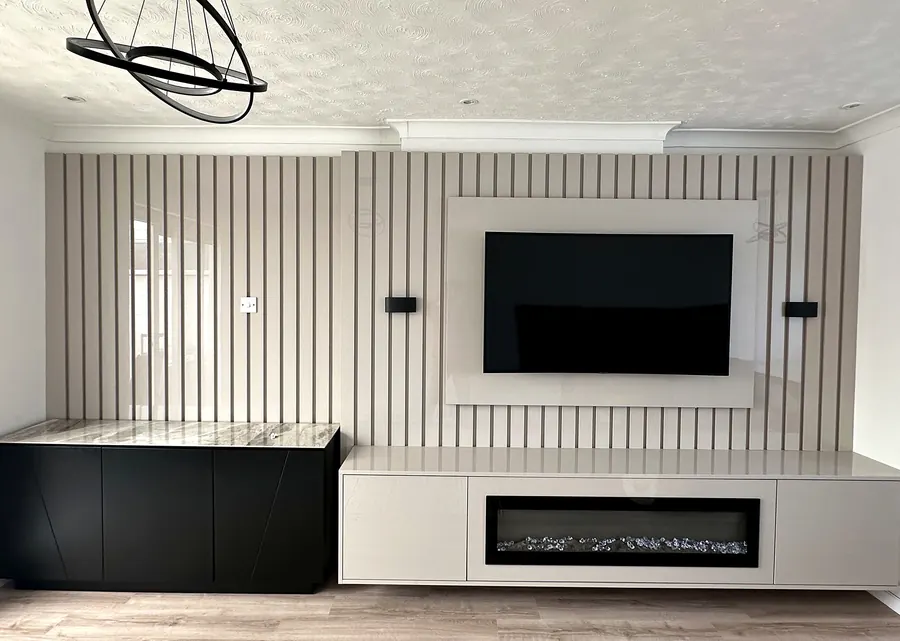
Slats, stone or lit shelving: choosing a media wall finish
Once the layout is fixed, the finish sets the mood. How timber slats, stone effects, paint and lighting compare on a media wall.
4 min read Read article -
 Media Walls
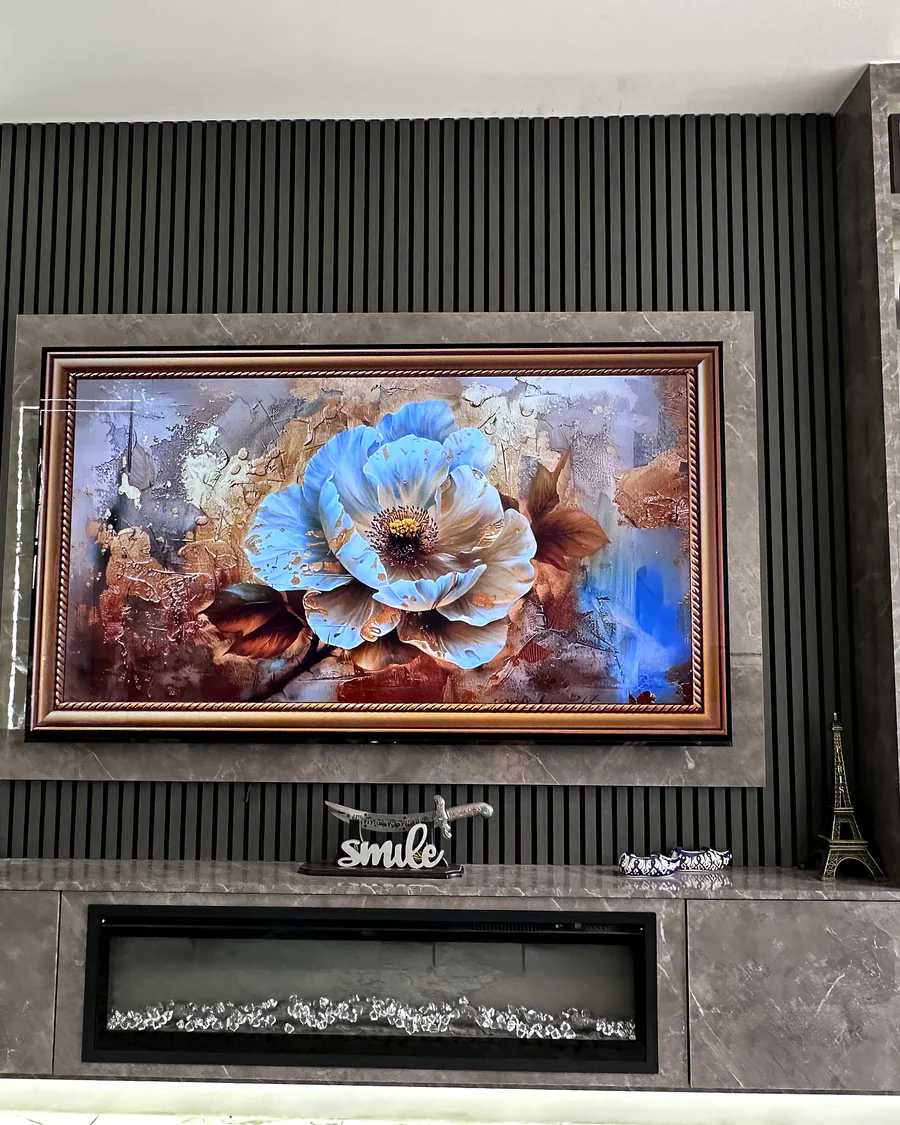
Electric fires in media walls: what to know before you choose
A built-in fire makes a media wall the warm heart of the room. How to choose the fire, where to place it and what it needs behind the scenes.
4 min read Read article