Electric fires in media walls: what to know before you choose
A built-in fire turns a media wall into the warm heart of the room. How to choose the size and type of fire, where to place it relative to the TV, and what it needs behind the scenes.
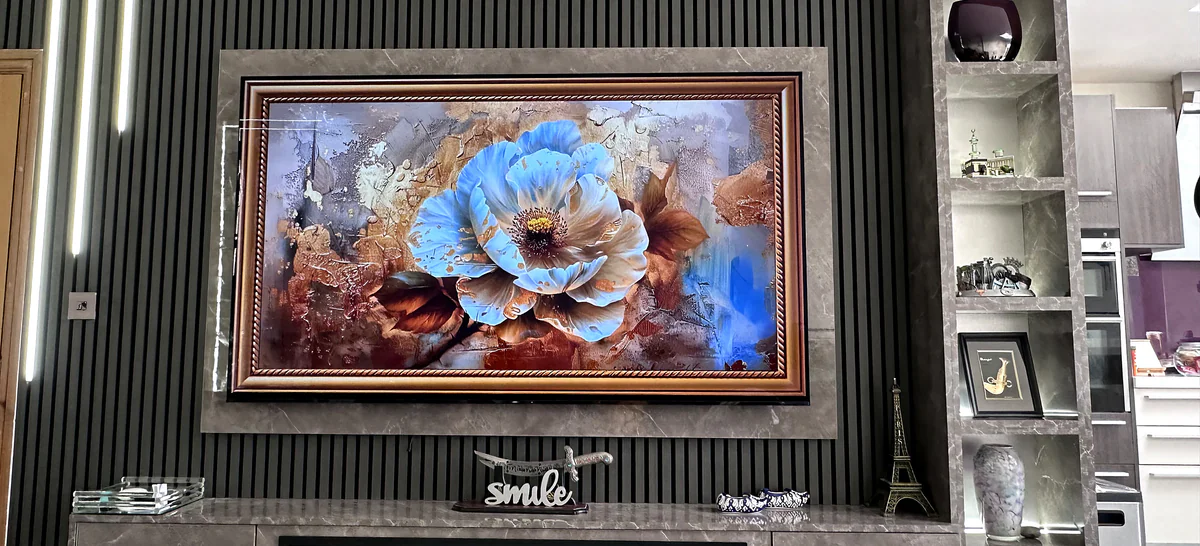
Electric fires have transformed media walls. They need no chimney or flue, they can be fitted almost anywhere, and modern flame effects are convincingly real. Built into the wall below the TV, a fire gives the room a focal point even when the screen is off.
Types of electric fire
- Inset fires are built into a recess in the media wall, so only the glass front shows. They give the cleanest finish.
- Panoramic or three-sided fires show the flames from the front and sides, suiting a wall with a projecting section.
- Wall-mounted fires sit on the surface; simpler to fit but less integrated.
Most media walls use a long, letterbox-style inset fire, which balances the wide shape of a TV above it.
Size and proportion
The fire and the TV work as a pair. As a guide, a fire roughly the same width as the screen — or a little narrower — looks balanced. Too small and it looks lost; too large and it competes with the TV. Mark both out on the wall with masking tape before deciding.
Placement and clearances
Every fire comes with installation instructions that specify the space it needs around it and the distance to anything above, including the TV. Follow them closely: they protect the screen and the joinery from heat. Fires that blow their heat forward or downward allow a closer gap, but the TV still shouldn’t be placed so high that it’s uncomfortable to watch.
Watch height first, fire second. The TV should sit at a comfortable height for viewing from the sofa. Design the fire around that height, rather than pushing the screen up to fit a bigger fire.
Flames, heat and settings
Most electric fires let you run the flame effect with or without heat, so you can enjoy the glow on a summer evening without warming the room. Heat output, flame colours, fuel beds of pebbles, logs or crystals, and the brightness of the effect all vary between models — it’s worth seeing them in person.
Behind the scenes
- Power: a dedicated socket inside the wall, reachable through an access panel.
- Ventilation: air gaps or vents as the manufacturer requires, so the fire runs efficiently.
- Access: the fire must be removable for servicing without taking the wall apart.
- Controls: remote, app or wall switch, ideally from where you sit.
Finishes around the fire
Stone-effect panels, marble, textured plaster and dark timber all frame a fire well, and a recessed reveal in a contrasting finish makes the flames stand out. Keep heat-sensitive finishes away from the opening, as specified.
Planned with the TV, the storage and the lighting, an electric fire turns a media wall into the place everyone gravitates to on a winter evening — and looks beautiful all year round.
Keep reading
-
 Media Walls
Planning a media wall: TV size, viewing height, fires and cables
A media wall should make a living room calmer, not busier. The measurements, electrics and fire details to settle before choosing finishes.
4 min read Read article -
 Media Walls
Slats, stone or lit shelving: choosing a media wall finish
Once the layout is fixed, the finish sets the mood. How timber slats, stone effects, paint and lighting compare on a media wall.
4 min read Read article -
 Media Walls
Media wall or TV unit? How to choose for your living room
A TV unit is quick and flexible; a media wall hides every cable and becomes part of the room. How to decide which suits your space.
4 min read Read article