Media wall lighting: backlit screens, lit shelves and mood scenes
Lighting is what makes a media wall glow in the evening. How to backlight the screen, light shelves and niches, and set scenes for film nights, reading and entertaining.
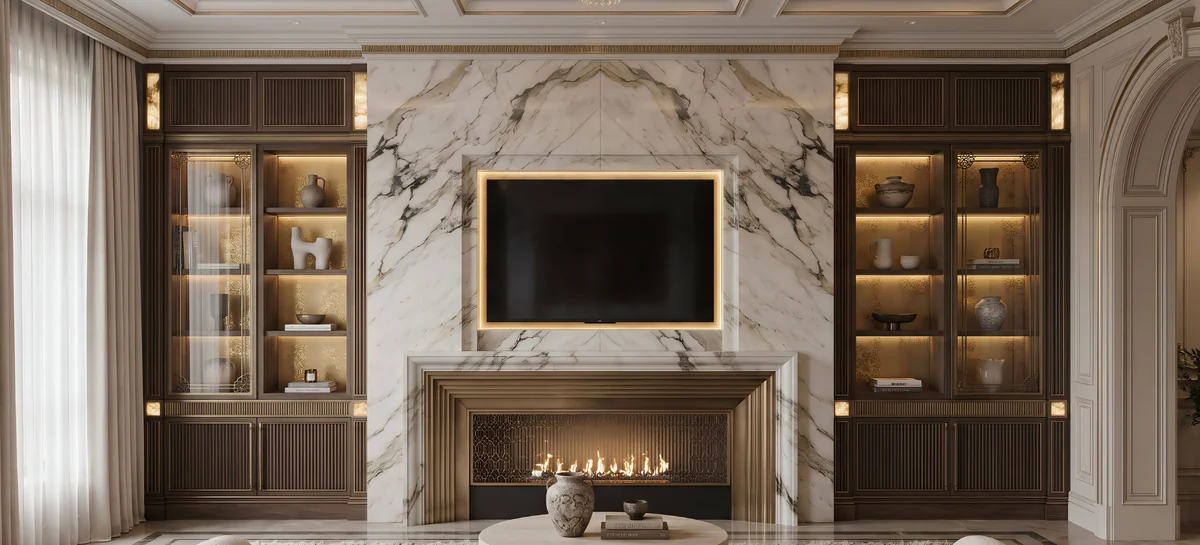
A media wall is the focal point of a living room, and lighting is what makes it come alive after dark. Built into the joinery, light can frame the screen, glow from shelves and display cabinets, and graze across stone and timber — all without a single lamp or trailing cable.
Backlighting the screen
A soft halo of light around the TV, from an LED strip set into the recess or behind a floating panel, does more than look good. It reduces the harsh contrast between a bright screen and a dark room, which makes watching more comfortable. Keep the light gentle and indirect: you should see the glow on the wall, not the LEDs themselves.
Shelves, niches and cabinets
- Shelf lighting: slim LED strips under or along each shelf light books and objects evenly.
- Display niches: a strip at the top or sides of a recess turns it into a lit picture frame.
- Glass cabinets: vertical strips in the corners make glassware and ornaments sparkle.
- Floating consoles: a glow underneath makes the unit appear to hover and lights the floor softly.
Accent lighting on finishes
Textured finishes look their best with light grazing across them. A strip at the top of a slatted panel or stone-effect wall brings out every line and shadow. Backlit stone or onyx panels, lit from behind, give a dramatic warm glow that becomes the main feature of the wall.
Hide the source. The best media wall lighting is seen as glow, not as dots of light. Recessed channels and diffusers hide the LEDs themselves, so the light looks smooth and continuous.
Colour temperature
Choose one warm white — around 2700K–3000K — for the whole wall, and match it to the room’s other lights. Mixing cool and warm whites is the quickest way to make joinery look unfinished. Colour-changing LEDs can be fun for a games room, but most clients prefer a consistent warm glow.
Dimmers and scenes
Put each part of the wall on its own circuit: screen backlight, shelves, cabinets and accent lights. With dimmers or a smart lighting system you can set scenes — just the backlight and fire for a film, everything on for guests, a soft glow from the shelves for reading.
Plan the wiring early
All of this depends on decisions made at design stage: where the drivers and transformers sit (somewhere ventilated and reachable), where the switches go, and how the cables run through the joinery. Planned with the wall itself, the lighting is completely hidden and easy to maintain.
Well-planned lighting means a media wall looks as good on a quiet evening with the TV off as it does on film night — warm, calm and beautifully finished.
Keep reading
-
 Media Walls
Planning a media wall: TV size, viewing height, fires and cables
A media wall should make a living room calmer, not busier. The measurements, electrics and fire details to settle before choosing finishes.
4 min read Read article -
 Media Walls
Slats, stone or lit shelving: choosing a media wall finish
Once the layout is fixed, the finish sets the mood. How timber slats, stone effects, paint and lighting compare on a media wall.
4 min read Read article -
 Media Walls
Electric fires in media walls: what to know before you choose
A built-in fire makes a media wall the warm heart of the room. How to choose the fire, where to place it and what it needs behind the scenes.
4 min read Read article