Media walls in the bedroom: a calm way to bring in the TV
A TV in the bedroom can either clutter the room or become part of a calm, finished design. How to plan a bedroom media wall around the bed, viewing height and storage.
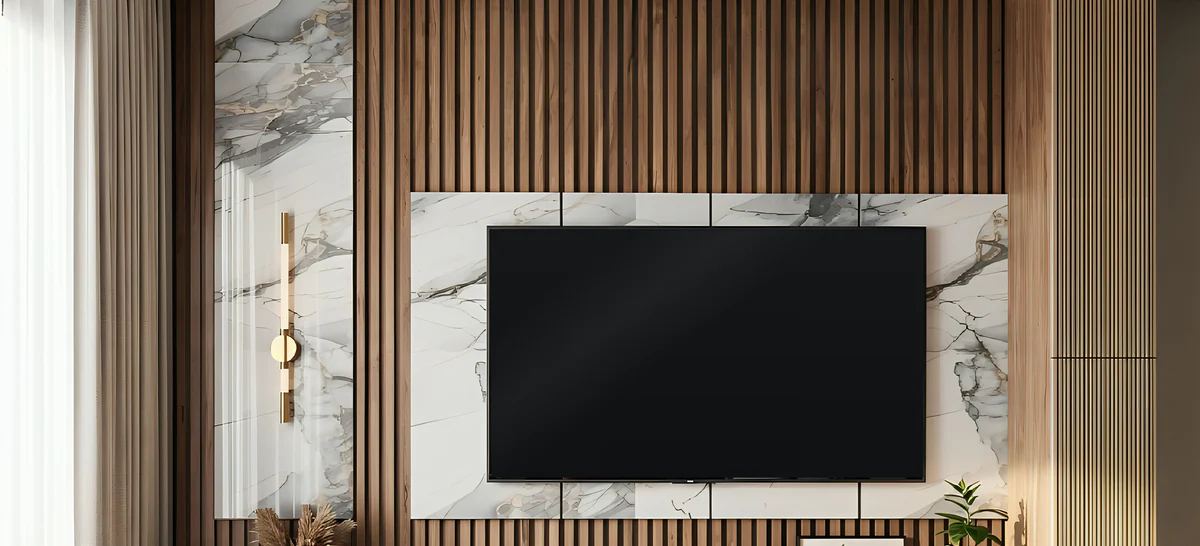
Bedrooms need a different approach to media walls than living rooms. The aim isn’t a dramatic centrepiece but a wall that holds the TV discreetly, adds useful storage and keeps the room feeling restful.
Viewing height and distance
In a living room, the TV is set for someone sitting upright on a sofa. In a bedroom you’re usually propped up against pillows, so the comfortable height is often a little higher than you might expect, and depends on the height of the bed and how you like to watch. Sit on the bed where you normally would and mark the centre of the screen on the wall before anything is designed. The screen size should suit the distance from the bed — bigger isn’t always better in a smaller room.
Finishes that feel calm
- Timber slats in oak or walnut bring warmth and texture.
- Painted panelling in a soft colour blends the wall with the rest of the room.
- Marble or stone-effect panels behind the screen add a touch of luxury.
- Fabric or acoustic panels soften sound and feel cosy.
Hiding the TV
Some people prefer not to see a screen when they’re not watching. Sliding or folding panels can close across the TV, and a matt black frame can make the screen almost disappear against a dark panel. When the panels are closed, the wall reads as panelling or a wardrobe front.
Design the wall with the bed. The media wall usually faces the bed, so plan both together. Matching materials on the bed wall and the media wall make the room feel like one considered design.
Storage in the same wall
A bedroom media wall can work hard. A floating console below the TV holds a streaming box and remote, while drawers on either side hold clothes or bedding. In some rooms the media wall can be combined with wardrobes or a dressing table, so the whole wall becomes storage with the screen at its centre.
Lighting for the evening
Bedrooms call for soft, warm lighting. A gentle backlight behind the TV reduces eye strain when watching in the dark, and lit shelves or niches give a low glow without switching on the main light. Put switches by the bed so everything can be turned off without getting up.
Keep it quiet
Hide cables completely, keep standby lights out of sight inside cupboards and choose equipment without bright indicator lights. Small details like these make a real difference to how restful the room feels at night.
Planned this way, a bedroom media wall brings in the TV without losing the calm — and adds storage that makes the whole room easier to live in.
Keep reading
-
 Media Walls
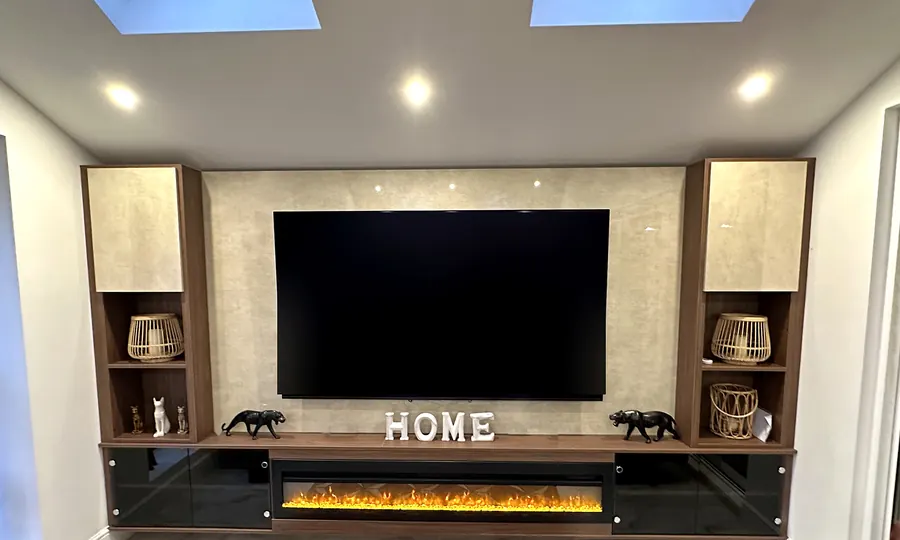
Planning a media wall: TV size, viewing height, fires and cables
A media wall should make a living room calmer, not busier. The measurements, electrics and fire details to settle before choosing finishes.
4 min read Read article -
 Media Walls
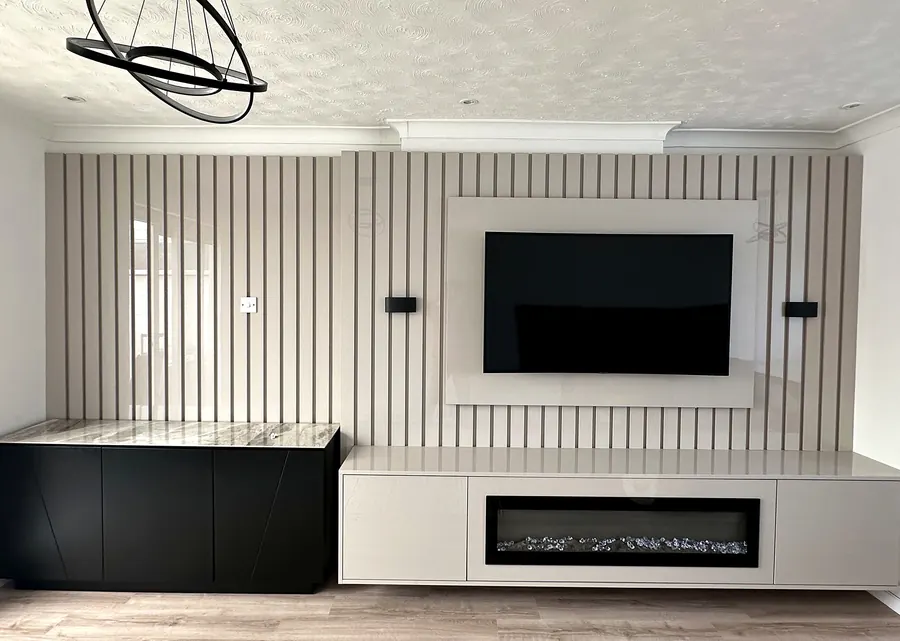
Slats, stone or lit shelving: choosing a media wall finish
Once the layout is fixed, the finish sets the mood. How timber slats, stone effects, paint and lighting compare on a media wall.
4 min read Read article -
 Media Walls
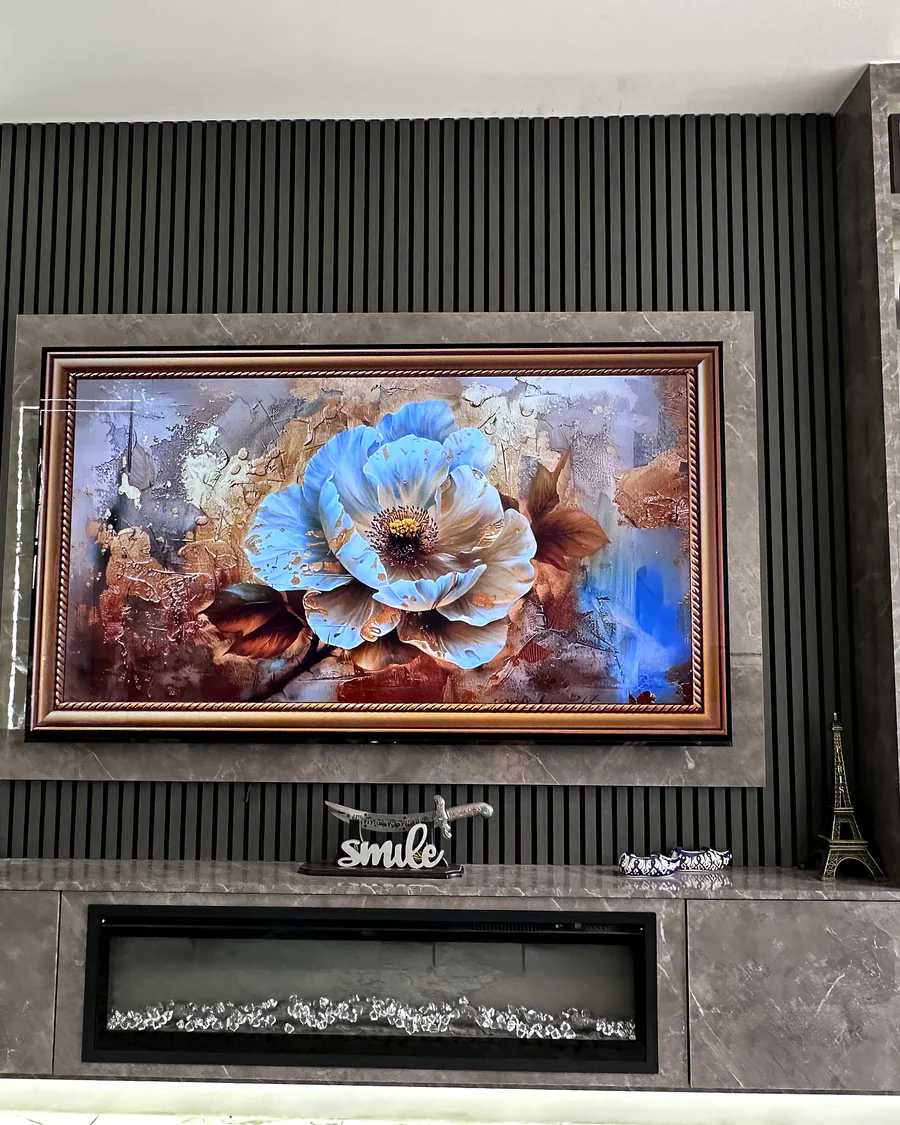
Electric fires in media walls: what to know before you choose
A built-in fire makes a media wall the warm heart of the room. How to choose the fire, where to place it and what it needs behind the scenes.
4 min read Read article