Display cabinets and lit shelving: showing off what you love
Collections, glassware and family pieces deserve better than a crowded shelf. How to plan display cabinets that protect what you love, light it beautifully and keep the room calm.
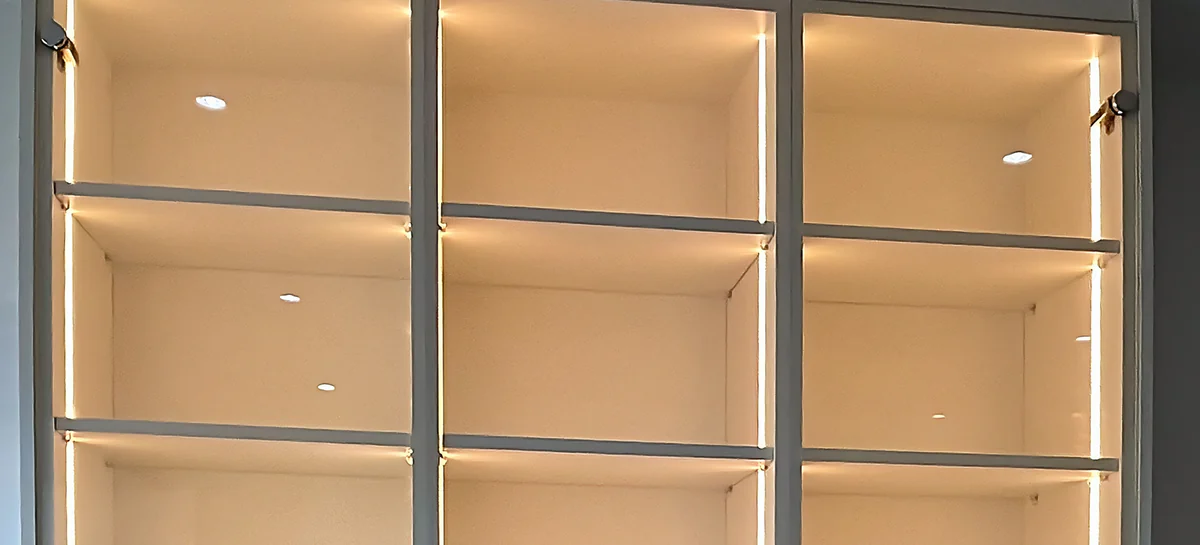
A display cabinet is part storage, part gallery. Designed around the pieces you want to show — crystal glasses, a ceramics collection, books, trophies, family heirlooms — it gives them pride of place and keeps the rest of the room uncluttered.
Open or glazed
Open shelves are relaxed and easy to change, ideal for books, plants and ceramics. Glass-fronted cabinets protect delicate items from dust and little hands, which makes them the better choice for glassware, collections and anything valuable. Many of our display units combine the two: glazed cabinets above, open shelves at the side, closed storage below.
Depths and spacing
- Depth: 25–35cm suits most displays; deeper cabinets can hold platters and larger pieces.
- Spacing: vary the shelf heights to suit what each shelf holds, rather than spacing them evenly.
- Glass shelves let light pass through, so lower shelves stay bright.
- Adjustable shelves allow the display to change over time.
Lighting
Lighting is what makes a display cabinet glow. Vertical LED strips in the front corners light objects evenly from the side, which suits glassware; strips under each shelf or along the back create a softer wash. Choose warm white for a welcoming feel, and put the display lights on their own switch or dimmer so they can be the only light on in the evening.
Light the back, not just the front. A softly lit back panel throws objects into silhouette and makes even a simple collection look curated.
Backgrounds and finishes
The inside of the cabinet matters as much as the outside. A darker back panel, a mirrored back or a textured finish such as fluted timber makes objects stand out. White and pale finishes keep a display light and fresh; walnut and dark paint feel rich and dramatic.
Storage below
A cabinet that is all display can feel busy. Closed cupboards or drawers below — for table linen, board games or everyday clutter — ground the design and give the unit a useful surface at waist height for lamps, photos or a single statement piece.
Styling the shelves
- Group similar objects together rather than spreading them evenly.
- Leave space around the most important pieces.
- Repeat a colour or material across the shelves to tie it together.
- Change the display with the seasons to keep it fresh.
A built-in display cabinet turns the things you love into part of the room’s design — beautifully lit, well protected and easy to enjoy every day.
Keep reading
-
 Living Spaces
Smart storage ideas that make a small home feel bigger
Well-planned built-in storage can feel like gaining an extra room. These ideas free up floor space without making your home feel boxed in.
4 min read Read article -
 Living Spaces
Alcove units and display shelving: built-ins that make a living room
Fitted shelving gives a living room character and storage. How to plan alcove units and display shelves that look considered, not cluttered.
4 min read Read article -
 Living Spaces
Home bars and drinks cabinets: planning a bar that fits your home
A built-in home bar doesn’t need a basement. How to plan the space, storage and lighting for a bar that feels made for your room.
4 min read Read article