Inside the wardrobe: planning rails, drawers and shelves around what you own
Two wardrobes of exactly the same size can hold very different amounts. The difference is the interior: the mix of rails, drawers and shelves, and where each one sits.
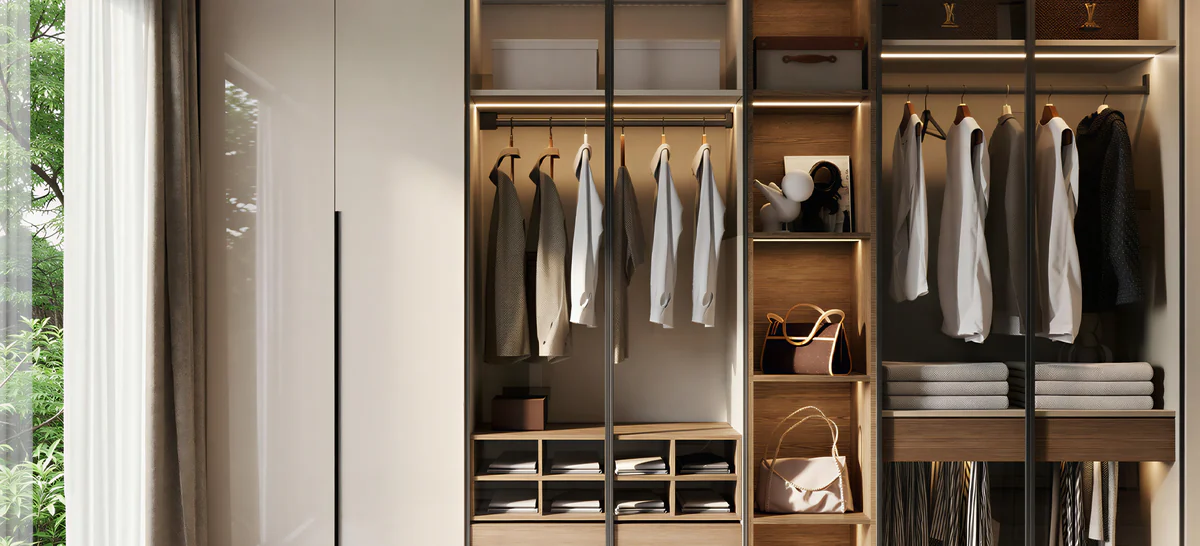
The doors are what everyone sees, but the inside is what you use every morning. A well-planned interior means every item has a home, nothing is buried at the back, and the wardrobe still works when your clothes change. Here’s how we plan one.
Measure your clothes, not just the room
Start by sorting what you own into groups: full-length hanging (coats, dresses, long skirts), short hanging (shirts, jackets, trousers folded over a hanger), folded items, shoes, bags and accessories. Measure the width each group takes up on a rail or shelf today, then add a little room to grow. Those numbers become the plan.
Hanging
- Long hanging needs about 150–170cm of drop. Keep it to the width you actually need.
- Double hanging — two rails, one above the other — suits shirts and jackets and holds nearly twice as much.
- Pull-down rails bring high hanging within reach in tall rooms.
- Pull-out rails that run front to back suit shallow wardrobes where hangers can’t fit side-on.
Drawers and shelves
Folded clothes are easier to see and reach in drawers than on deep shelves, where piles topple and the back is forgotten. Internal drawers behind the doors keep a calm exterior; glass-fronted drawers let you see what’s inside. Shelves work well for bulky knitwear and bags, ideally around 30–40cm apart so stacks stay manageable.
Shoes and accessories
Angled shoe shelves at the base show every pair at a glance, while pull-out shoe racks make the most of depth. For accessories, shallow drawers with dividers hold belts, ties, scarves and jewellery, and a pull-out valet rail is perfect for laying out tomorrow’s outfit.
Think in zones. Divide the wardrobe into what you use daily, weekly and seasonally. Daily items go in the middle band, everything else above and below.
Light and ventilation
LED strips along shelves and rails, switched on as the door opens, make the whole interior easy to see. Wardrobes against outside walls benefit from a small ventilation gap at the top and bottom to keep air moving and clothes fresh.
Build in flexibility
Clothes change with jobs, seasons and stages of life. Adjustable shelf pins and rails that can be moved make a wardrobe far more forgiving. If two people share, give each a section with their own mix of hanging and drawers, so neither side takes over.
A quick interior checklist
- Long hanging only where it’s needed; double hanging everywhere else.
- Drawers for folded clothes, shelves for bulky items.
- Shoes at the bottom, seasonal storage at the top.
- Lighting and dividers planned at the same time as the layout.
Plan the inside first and the outside will look after itself. A wardrobe built around what you own is one you’ll never outgrow.
Keep reading
-
 Bedrooms & Wardrobes
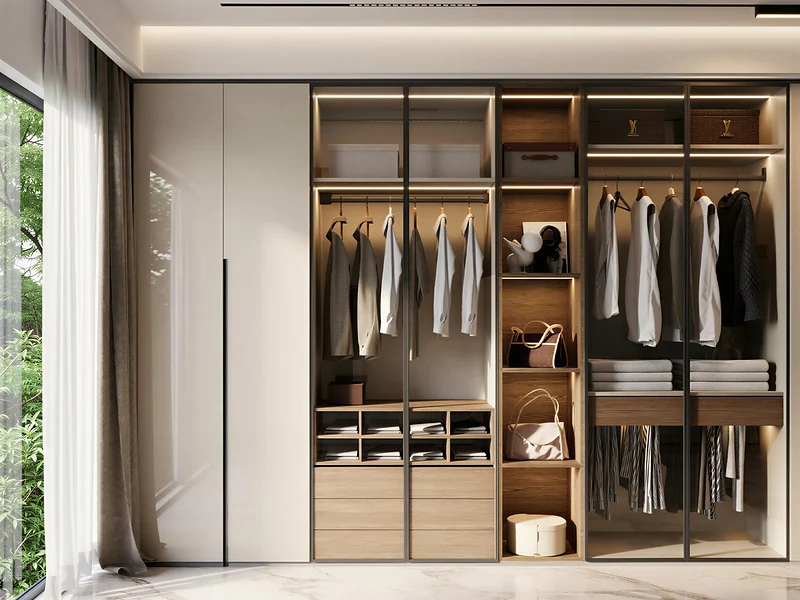
5 wardrobe planning mistakes that quietly waste your space
Most wardrobes fail on the inside, not the outside. Avoid these five common layout mistakes and you’ll fit more in — and actually find it again.
4 min read Read article -
 Bedrooms & Wardrobes
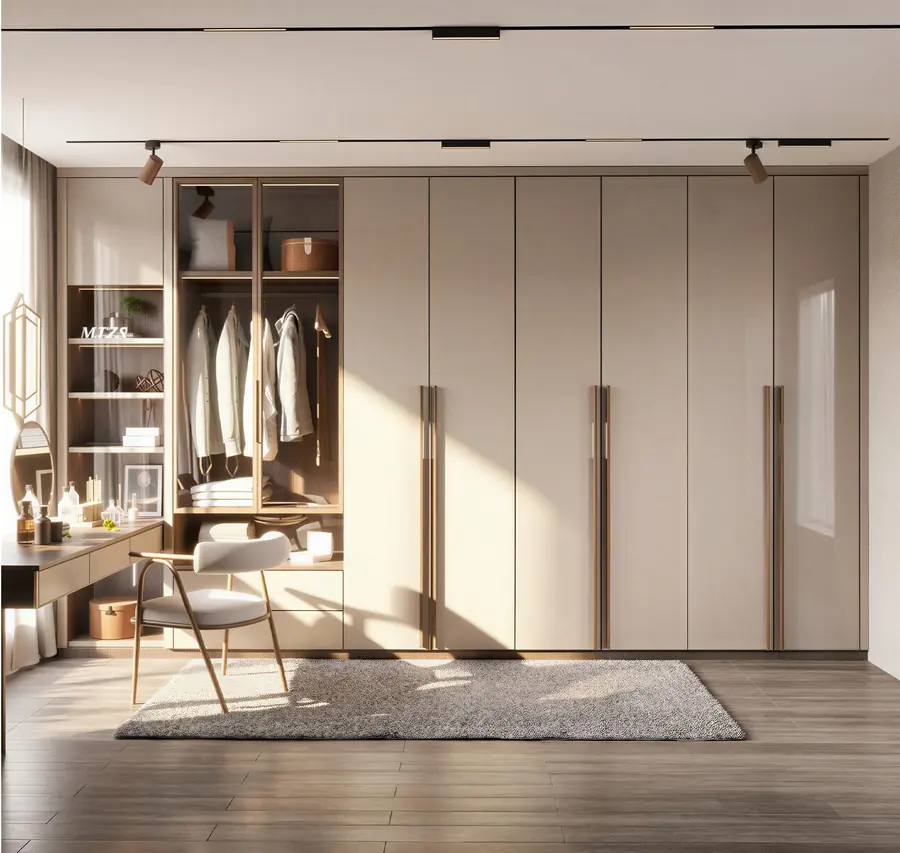
Sliding or hinged wardrobe doors? How to choose for your room
Doors decide how much floor a wardrobe needs and how easily you see inside. How sliding and hinged doors compare — and which suits your room.
4 min read Read article -
 Bedrooms & Wardrobes
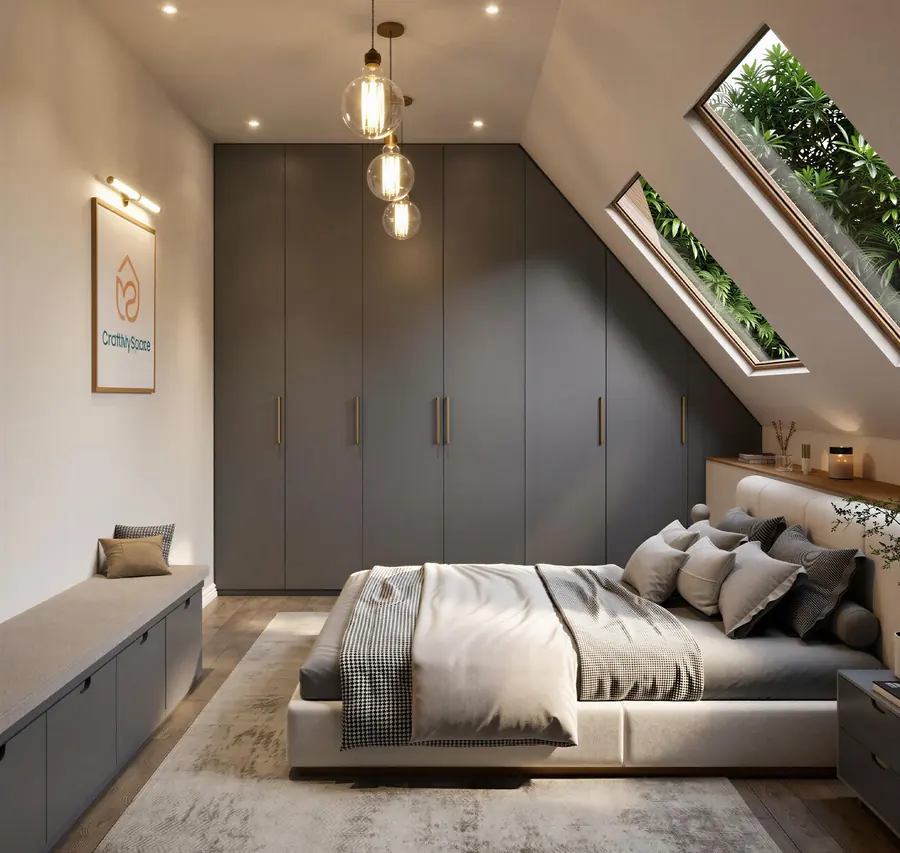
Sloping ceilings, alcoves and eaves: fitted furniture for awkward bedrooms
Loft rooms, chimney breasts and sloping ceilings defeat freestanding furniture. How fitted storage turns awkward corners into the most useful part of a bedroom.
4 min read Read article