Sliding or hinged wardrobe doors? How to choose for your room
The doors decide how your wardrobe looks, how much floor it needs and how easily you can see inside. Here’s how to choose the right ones for your bedroom.
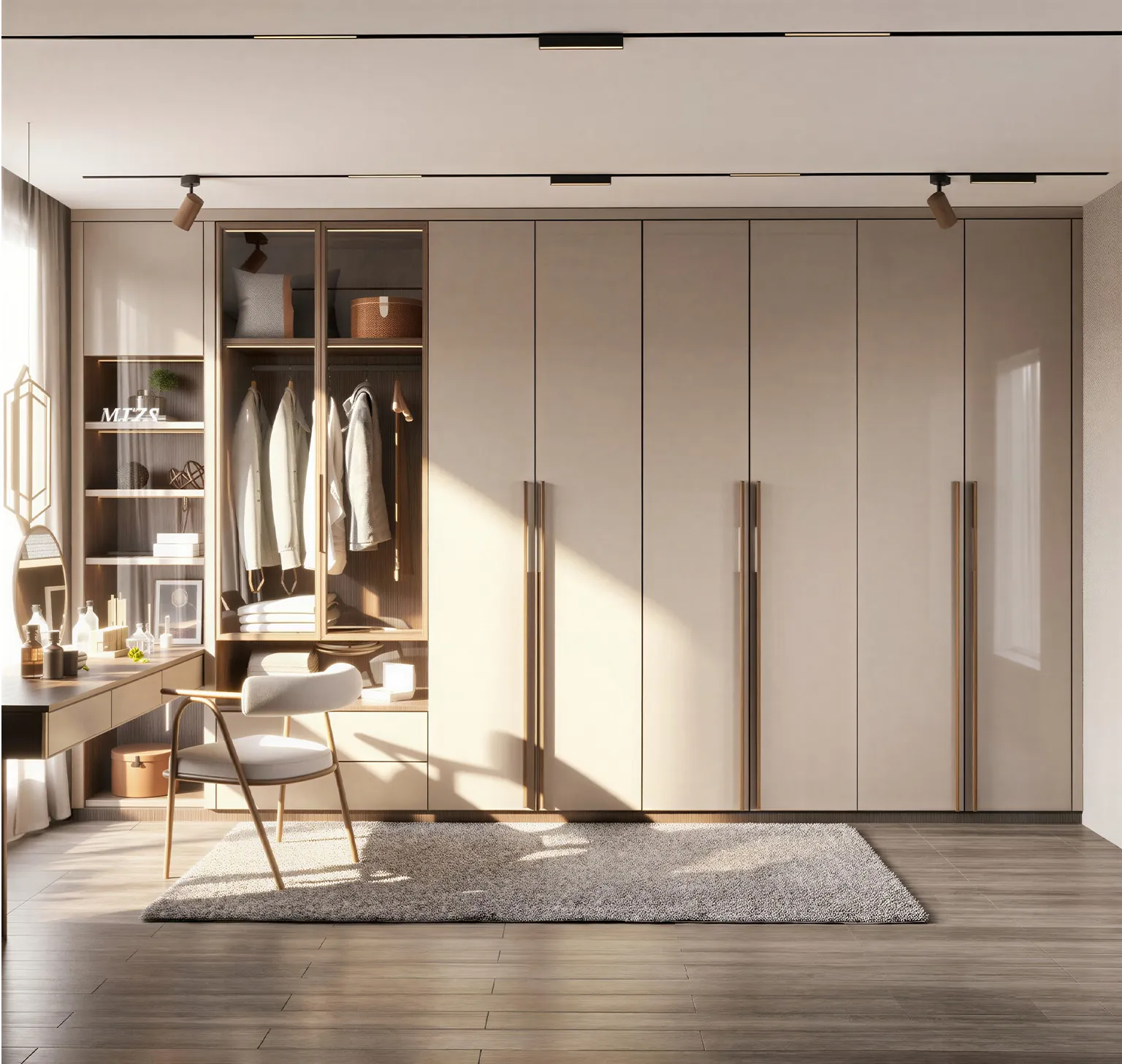
Once you’ve planned the inside of your wardrobe, the next big decision is how it opens. It sounds like a question of style, but it changes the depth of the wardrobe, where the bed and furniture can go, and how you use it every morning. Neither type is better overall — each suits different rooms.
When sliding doors make sense
Sliding doors run on tracks, so they need no space in front of them to open. That makes them the natural choice when:
- the bed sits close to the wardrobe and a hinged door would hit it;
- the room is narrow, such as a box room or a loft bedroom;
- you want large, uninterrupted panels — mirror, glass or one colour running wall to wall.
Large mirrored sliders are one of the simplest ways to make a small bedroom feel bigger, bouncing light across the room.
The compromises with sliding doors
- You can only open part of the wardrobe at a time, because the panels overlap. Plan the inside so related things sit behind the same door.
- The track and overlapping panels add depth — typically 8–10cm — so a sliding wardrobe takes slightly more floor than a hinged one with the same interior.
- Internal drawers need to sit clear of where the doors overlap, which can limit where they go.
- Cheap tracks rattle and jump. Good soft-close runners are worth paying for; you’ll use them every day.
When hinged doors make sense
Hinged doors open fully, so you can see the whole wardrobe at once — ideal if you like to choose an outfit at a glance. They suit:
- rooms with clear floor in front of the wardrobe — roughly the width of a door, plus a little more;
- traditional and period homes, where panelled or Shaker-style doors suit the architecture;
- interiors full of drawers, pull-out trays and accessories, which work best without overlapping panels.
They also make room for details like a full-length mirror inside a door, integrated handles and decorative mouldings.
Other options worth considering
- Bi-fold doors fold in half, needing about half the swing space of a standard door.
- Pocket doors slide back into the sides of the wardrobe when open — a good fit for dressing areas and walk-ins.
- Open or glass-fronted sections show off a few favourite pieces and break up a long run of doors, especially with lighting inside.
Measure the gap. Measure from the front of the wardrobe to the bed, radiator or window. With less than around 60cm, sliding or bi-fold doors will almost always be easier to live with.
Finishes and handles
Whichever you choose, the finish sets the tone of the room. Matt painted doors feel calm and modern; timber veneers add warmth; mirror and tinted glass bring light and depth. Handleless designs with push-to-open or recessed grips keep things minimal, while long bar handles or knobs add a crafted detail. On a long run of hinged doors, lining the handles up at the same height across the wall makes the design feel considered.
Questions to ask before deciding
- How much clear floor is there in front of the wardrobe?
- Do you prefer to see everything at once, or one section at a time?
- Where will the drawers go — and will they clear the doors?
- Could mirrored doors save you buying a separate mirror?
Start with the room — the floor space, the bed position and the light — then choose the doors that work with it. Get that right, and the wardrobe will feel effortless every day.
Keep reading
-
 Bedrooms & Wardrobes
5 wardrobe planning mistakes that quietly waste your space
Most wardrobes fail on the inside, not the outside. Avoid these five common layout mistakes and you’ll fit more in — and actually find it again.
4 min read Read article -
 Bedrooms & Wardrobes
Sloping ceilings, alcoves and eaves: fitted furniture for awkward bedrooms
Loft rooms, chimney breasts and sloping ceilings defeat freestanding furniture. How fitted storage turns awkward corners into the most useful part of a bedroom.
4 min read Read article -
 Bedrooms & Wardrobes
Planning a walk-in wardrobe: how much space you really need
A walk-in wardrobe doesn’t need a mansion. How much space each layout needs, and how to turn a box room or bedroom corner into a dressing room.
4 min read Read article