Quartz, granite, porcelain or timber: choosing a worktop you won’t regret
Your worktop takes more daily wear than any other surface in the house. Here’s how the most popular materials really compare on looks, durability and upkeep.
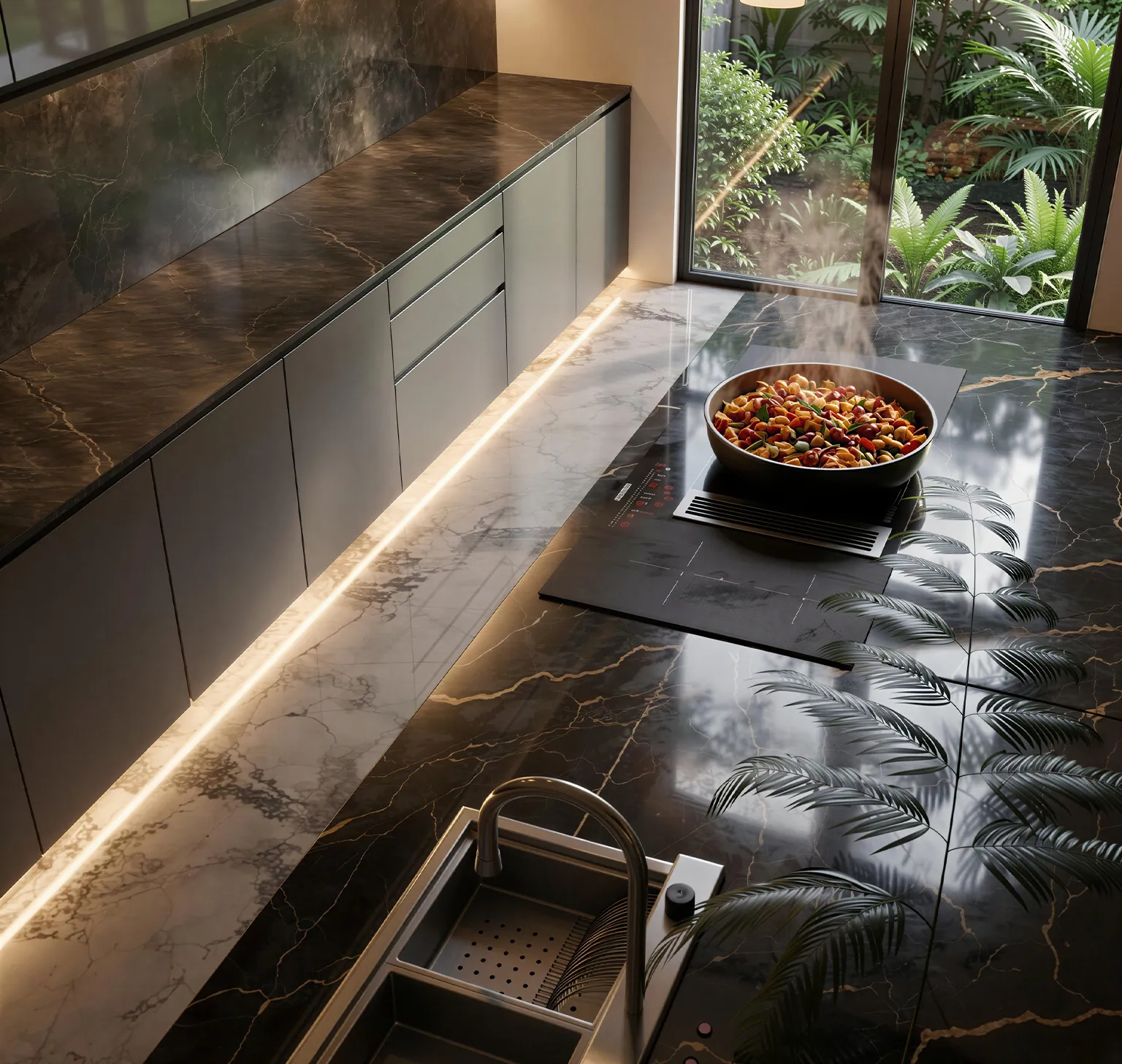
The worktop is the surface you touch hundreds of times a day — chopping, rolling, wiping, leaning. It also sets the tone of the whole kitchen. Choosing well means balancing three things: how it looks, how it wears, and how much looking after you’re honestly willing to do.
Quartz
Engineered quartz is made from crushed natural quartz bound with resin. It’s non-porous, so it doesn’t need sealing and resists stains from wine, coffee and oil. It comes in a huge range of colours, including convincing marble-effect designs, with a consistent pattern from slab to slab.
Watch out for heat. The resin can scorch or discolour if a hot pan goes straight down, so trivets are a must. Best for busy family kitchens where easy upkeep matters most.
Granite
A natural stone that’s hard-wearing and highly heat-resistant. Every slab is unique, with a depth and movement that engineered materials try to imitate. Granite needs resealing from time to time to stay stain-resistant, but modern sealants make that an occasional job rather than a chore. Best for keen cooks who want a natural, heat-tolerant surface.
Porcelain and sintered stone
Fired at very high temperatures, these slabs are thin, extremely hard, heat-proof and highly resistant to stains and scratches. They suit a sleek, contemporary look and can also clad the splashback or a whole wall so everything matches.
Watch out for edges. Porcelain is hard but can chip if something heavy catches a corner, and on many slabs the pattern sits on the surface, so check how the edges are finished. Best for modern kitchens and anyone who cooks hot and fast.
Marble
Nothing quite matches real marble for beauty. But it’s softer and more porous than granite: lemon juice, wine and vinegar can etch it, and it marks over time. Some people love that patina; others find it stressful. If you love the look but not the upkeep, use marble only on a baking area or island, or choose a marble-effect quartz or porcelain.
Solid timber
Oak, walnut and iroko bring a warmth that stone can’t, and they soften a kitchen full of painted or handleless doors. Scratches and small burns can be sanded out, so a timber top can be renewed rather than replaced. It does need oiling — often monthly at first, then a few times a year — and is best kept away from the area right around the sink. Best for islands, breakfast bars and characterful kitchens.
Laminate
Modern laminates are far better than they used to be, with realistic stone and wood finishes at a modest cost. They’re a sensible choice for utility rooms or tighter budgets, though they’re less heat-resistant and harder to repair if the surface is damaged.
Mix materials. Often the best answer is two: a hard-wearing quartz or porcelain run around the sink and hob, and a timber or marble island where you prep, eat and gather.
The finishing details
- Thickness. 20mm looks slim and contemporary; 30mm feels more substantial. Thinner porcelain slabs suit minimalist designs.
- Edges. A slightly rounded edge resists chipping better than a sharp square one.
- Splashbacks. Running the worktop material up the wall gives a seamless, easy-clean surface behind the hob.
- Sinks. Undermounted sinks look neat and let you wipe crumbs straight in, but need a solid surface such as stone or quartz.
- Samples. Look at a large sample in your own kitchen, in morning and evening light, before you decide.
There’s no perfect worktop — only the right one for how you cook. Be honest about how careful you’ll be with hot pans and spills, and choose the material whose care you’ll actually keep up.
Keep reading
-
 Kitchens
Bespoke vs. off-the-shelf kitchens: what you’re really paying for
A fitted kitchen is one of the biggest investments in a home. Here’s where bespoke genuinely earns its price — and where a standard range will do just fine.
4 min read Read article -
 Kitchens
Island, peninsula or galley? Choosing the right kitchen layout
Before choosing a single door colour, decide how the room should flow. How to pick the layout that suits your space and the way you cook.
4 min read Read article -
 Kitchens
Choosing kitchen colours and finishes that still feel right in ten years
Colour is the first thing you notice and the hardest thing to change. How to choose a palette and finish you’ll still love in ten years.
4 min read Read article