Bespoke vs. off-the-shelf kitchens: what you’re really paying for
A fitted kitchen is one of the biggest investments you’ll make in a home. Here’s where bespoke genuinely earns its price — and where a standard range will serve you perfectly well.
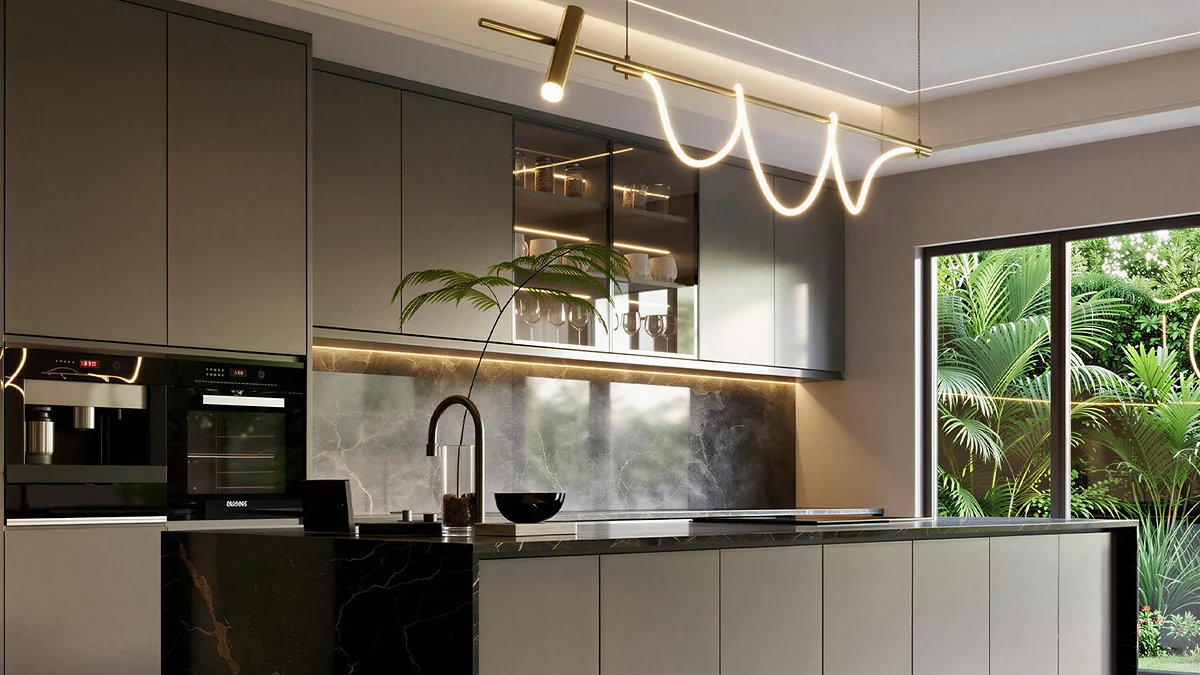
Walk into any kitchen showroom and you’ll find two very different price lists. One is for standard, modular ranges; the other is for kitchens made to measure. The honest answer to “is bespoke worth it?” is that it depends — on your room, on how long you plan to stay, and on what frustrates you about the kitchen you have now. This guide explains what actually changes when you go bespoke, so you can decide with clear eyes.
What “off-the-shelf” really means
Standard kitchens are built from a catalogue of cabinets in fixed widths, usually in steps of 150mm. A planner arranges these boxes to fill your walls as closely as possible, then closes the leftover gaps with filler panels. In a regular, square room this works well and keeps costs predictable. Lead times are often shorter, and replacing a damaged door years later is usually straightforward.
The compromises appear at the edges: slim fillers beside walls, dead voids in the corners, wall units that stop short of the ceiling, and a limited choice of colours and door styles.
What bespoke actually gives you
A bespoke kitchen starts from your measurements rather than a catalogue. Every cabinet is made to the size the room needs, so the design fills the space exactly — wall to wall and floor to ceiling.
- Fit. Units follow out-of-square walls, sloping ceilings, chimney breasts and bay windows without awkward gaps.
- Storage. Corners, the space above wall units and the gap beside the fridge become usable storage instead of empty air.
- Finish. You aren’t limited to a fixed colour chart. Doors can be painted any shade, veneered, or made in a profile that suits the house.
- Continuity. A larder, breakfast bar, utility run or matching dresser in the dining area can be designed as one piece of furniture.
Where bespoke earns its price
Bespoke makes the most sense when your room doesn’t suit standard sizes — older houses with uneven walls, narrow galley kitchens, extensions with angled rooflines — or when the kitchen is open to a living or dining area and needs to feel like furniture rather than a row of units. It’s also worth it if you plan to stay for many years: a kitchen built around the way you cook and store things pays you back every single day.
Where a standard range is enough
If your room is a simple rectangle, you’re happy with a popular finish and you expect to move within a few years, a well-installed modular kitchen can be excellent value. Spend the budget where your hands go: a good worktop, quality hinges and drawer runners, and careful fitting.
Look inside, not just at the doors. Ask to see the inside of a cabinet. The carcass material, the hinges and the drawer runners tell you more about quality than any door sample.
The costs people forget
The cabinets are only part of the bill, whichever route you take. Make sure every quote you compare includes the same things:
- Worktops, upstands and splashbacks, including templating and cut-outs.
- Appliances — and whether they are integrated behind doors or freestanding.
- Sinks, taps and lighting beneath the wall units.
- Removing the old kitchen, plumbing and electrical work, plastering and making good.
- Fitting — and who is responsible if something doesn’t line up.
A low quote that leaves half of these out is not the cheaper kitchen.
Questions to ask before you commit
- Are the cabinets made to measure, or adapted from standard sizes?
- What are the carcasses made from, and how thick are they?
- Which hinges and runners are used, and what guarantee comes with them?
- Who measures, who designs and who fits — and is it the same team?
- What happens if a wall turns out to be out of square on fitting day?
Bespoke isn’t automatically better, and standard isn’t automatically cheaper once everything is included. Start with how you want the room to work, get like-for-like quotes, and choose the option that solves your real problems.
Keep reading
-
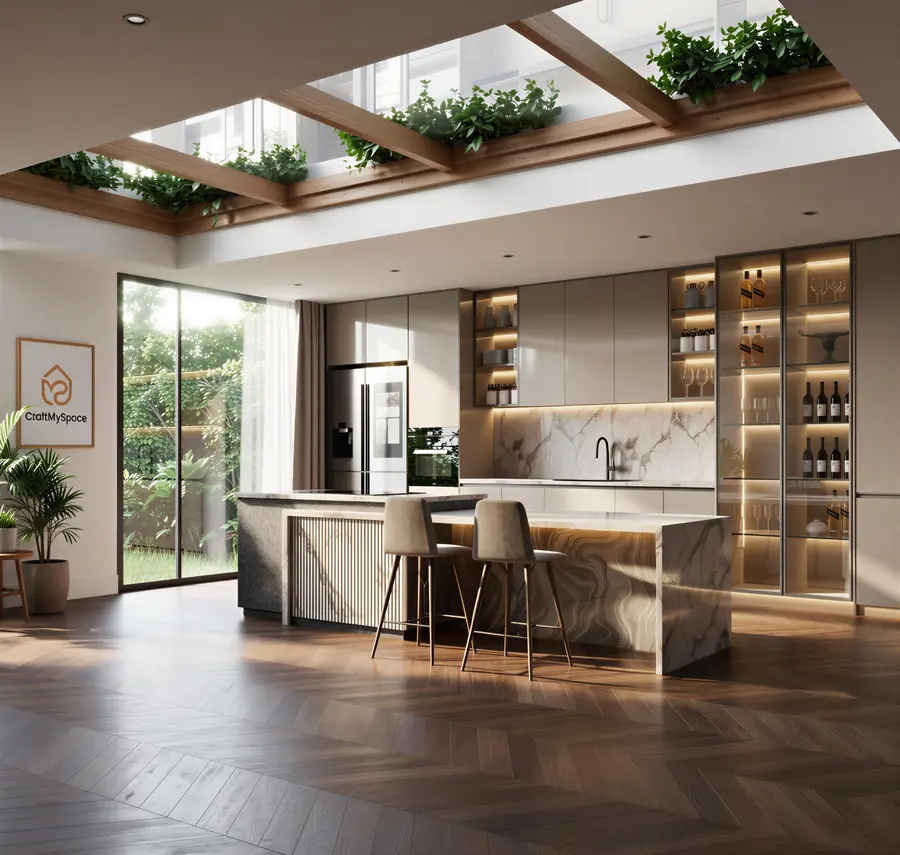 Kitchens
Island, peninsula or galley? Choosing the right kitchen layout
Before choosing a single door colour, decide how the room should flow. How to pick the layout that suits your space and the way you cook.
4 min read Read article -
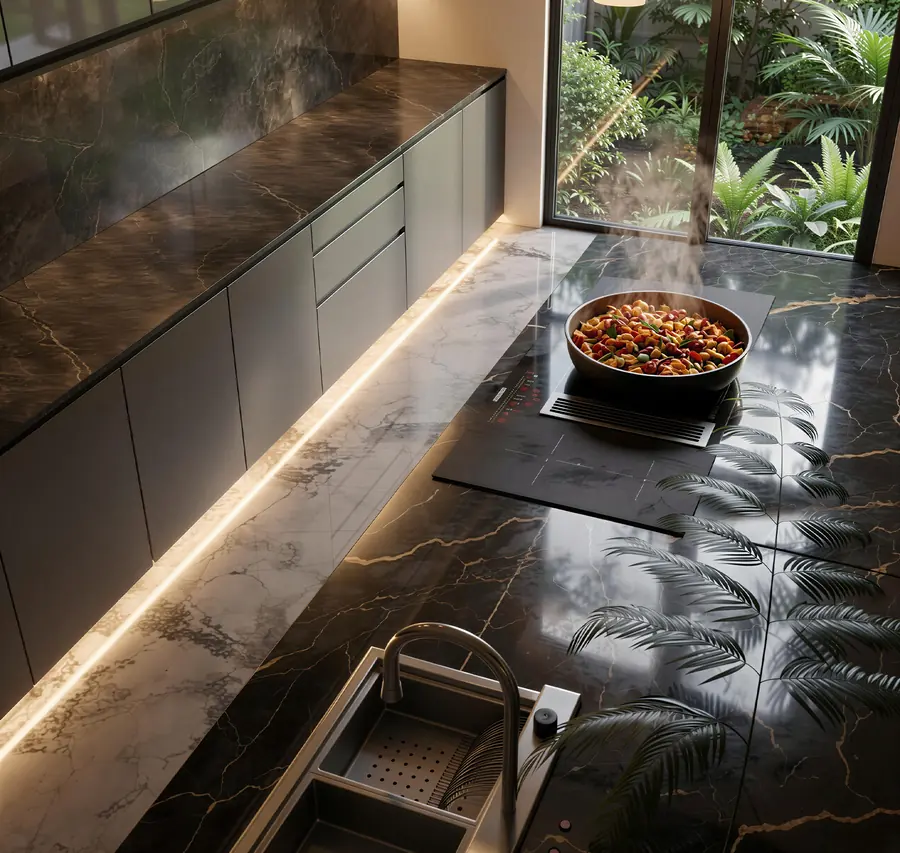 Kitchens
Quartz, granite, porcelain or timber: choosing a worktop you won’t regret
The worktop takes more wear than any other surface in your home. How quartz, granite, porcelain, timber and laminate really compare.
4 min read Read article -
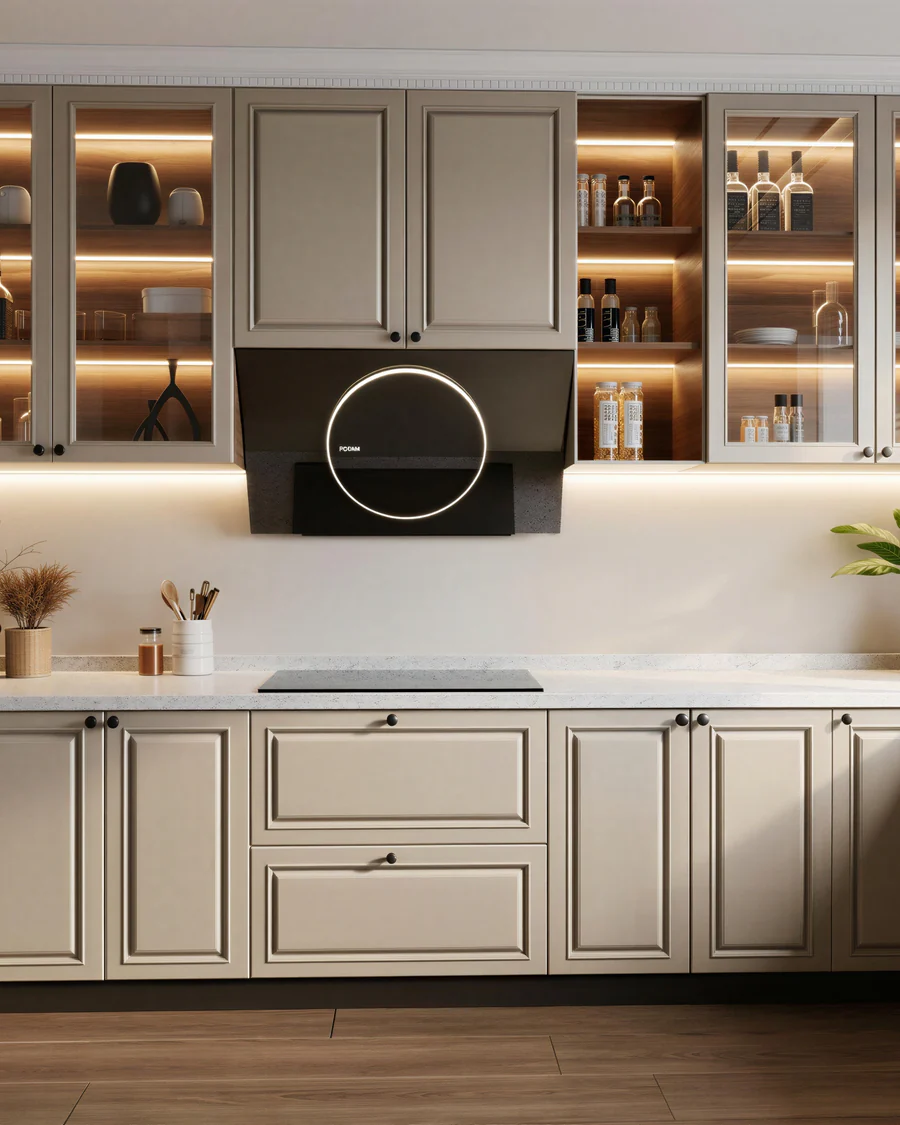 Kitchens
Choosing kitchen colours and finishes that still feel right in ten years
Colour is the first thing you notice and the hardest thing to change. How to choose a palette and finish you’ll still love in ten years.
4 min read Read article