Home office storage: a workspace that stays tidy without trying
A tidy desk makes for a clearer head. How to plan home office storage so paperwork, equipment and cables all have a place — and the room is easy to close the door on at the end of the day.
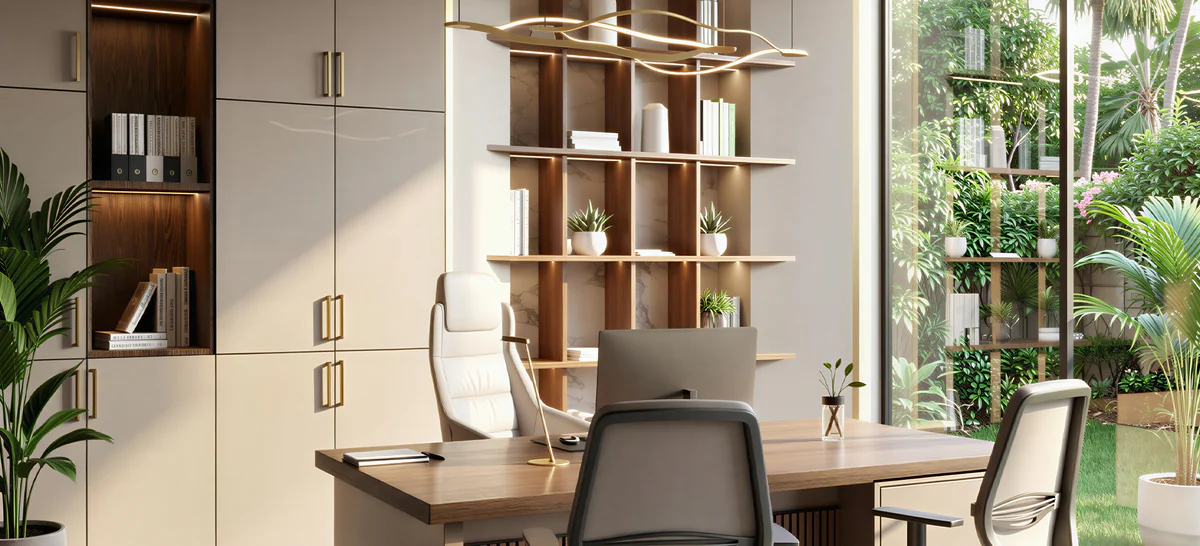
A home office tends to collect things: paperwork, chargers, a printer, spare stationery, files you must keep but rarely open. Without a plan, they spread across the desk and floor. Good storage keeps the room calm and lets you start each day with a clear surface.
Start with what you keep
Go through everything the office needs to hold and sort it into three groups: what you use every day, what you use now and then, and what you keep for the record. Daily items belong within arm’s reach of the chair; occasional items in cupboards close by; archive boxes higher up or further away.
At the desk
- A drawer pedestal with a shallow top drawer for stationery and a deep drawer for hanging files.
- A slim drawer beneath the desktop for notebooks and the laptop at the end of the day.
- A cable tray under the desk to keep chargers and plugs off the floor.
- A shelf above for the reference books and folders you reach for daily.
Tall cupboards
Full-height cupboards beside or behind the desk hold far more than any freestanding unit. Fit them with adjustable shelves, a section for box files and space for bulky items like a printer paper supply or a spare monitor. In a dual-purpose room, tall cupboards can hide the office completely when guests arrive.
Give the printer a home. A pull-out shelf behind a cupboard door, with a socket and a small ventilation gap, hides the printer, router and shredder but keeps them ready to use.
Open shelving
A run of closed storage can feel heavy. A few open shelves — for books, plants and objects you enjoy — make the office feel personal and give a good backdrop for video calls. Keep them for display rather than overflow, so they don’t become clutter.
Hide the cables
Plan sockets, network points and USB chargers inside the joinery, with grommets in the desk and a cable route down through the units. With nothing trailing, the room looks finished and cleaning is easier.
Close the door on work
If the office is part of a bedroom or living room, storage is what lets you switch off. A desk area with doors that fold or slide across, or cupboards that hide the screen and papers, turns the space back into a home at the end of the day.
Plan storage around what you really keep, and a home office stays tidy almost by itself — making it a nicer place to work and an easier room to live with.
Keep reading
-
 Home Offices
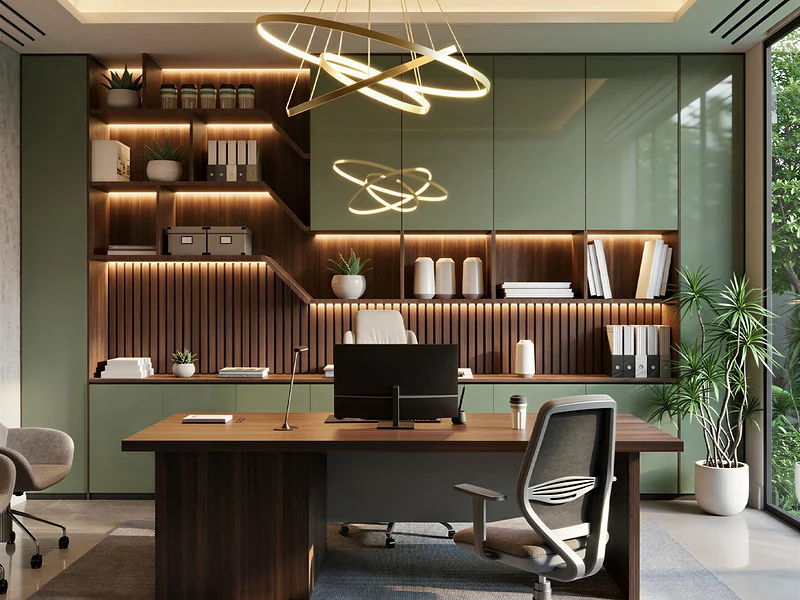
Home office design: how to build a workspace you’ll actually use
A good home office isn’t about an expensive desk. Light, storage and layout decide whether you work there every day — or drift back to the kitchen table.
4 min read Read article -
 Home Offices
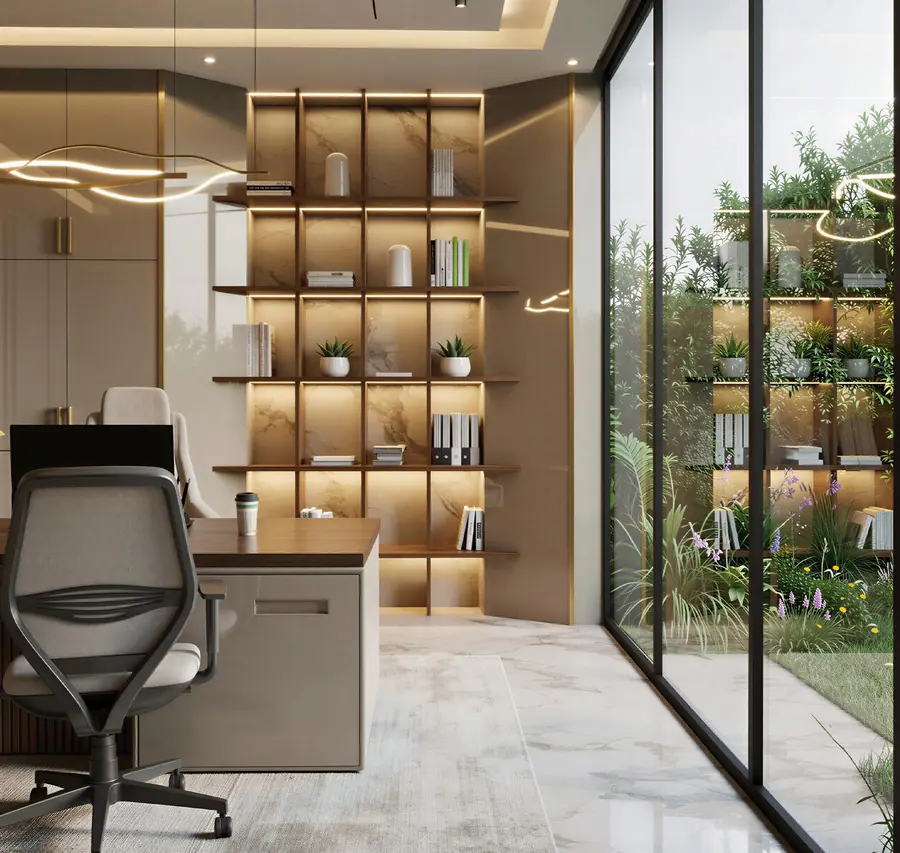
No spare room? How to fit a real workspace into a small home
You don’t need a dedicated study to work well at home. How to turn a bedroom corner, alcove or landing into a workspace that closes away.
4 min read Read article -
 Home Offices
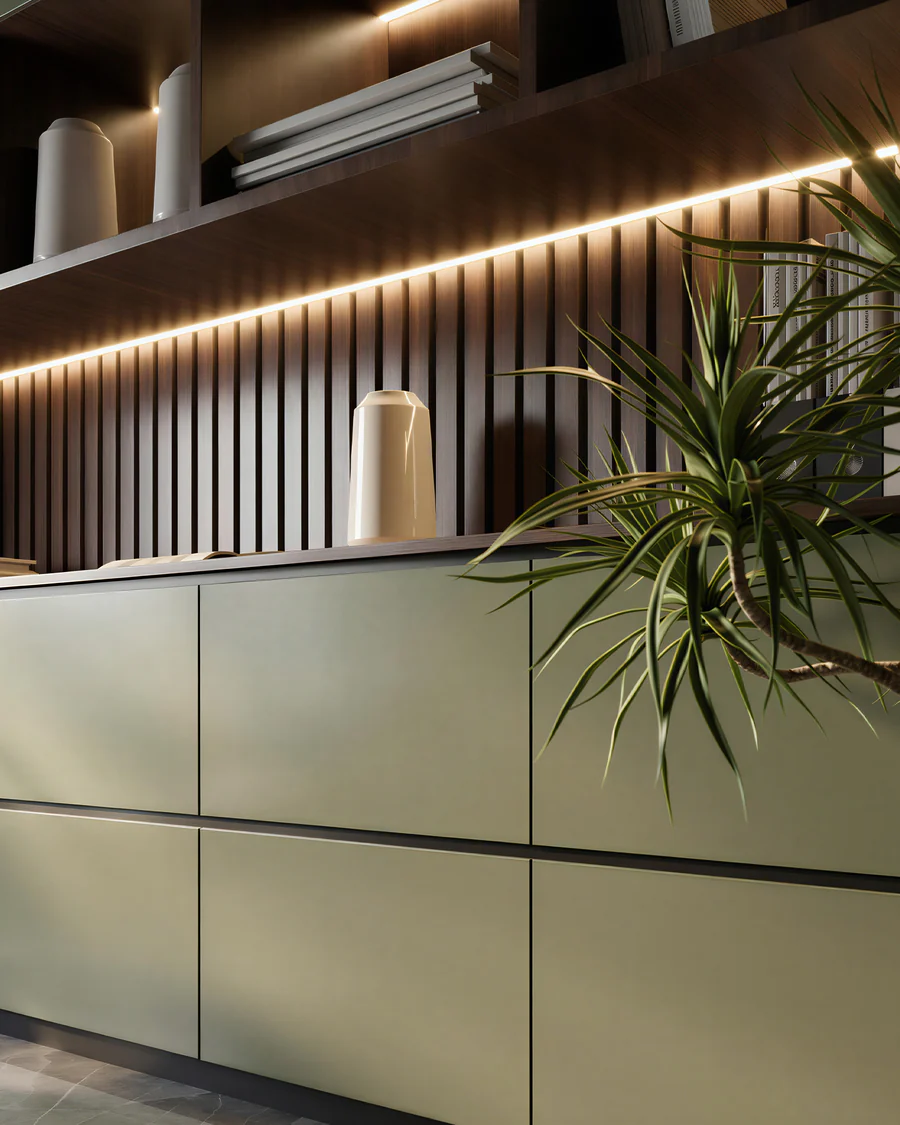
Lighting a home office: daylight, task light and no glare on screen
Bad lighting makes a home office tiring. How to use daylight, light the work in front of you and keep reflections off your screen.
4 min read Read article