Built-in bookcases and library walls for a study
A wall of books is one of the most characterful things you can add to a room. How to plan built-in bookcases that hold your collection, display what you love and still look calm.
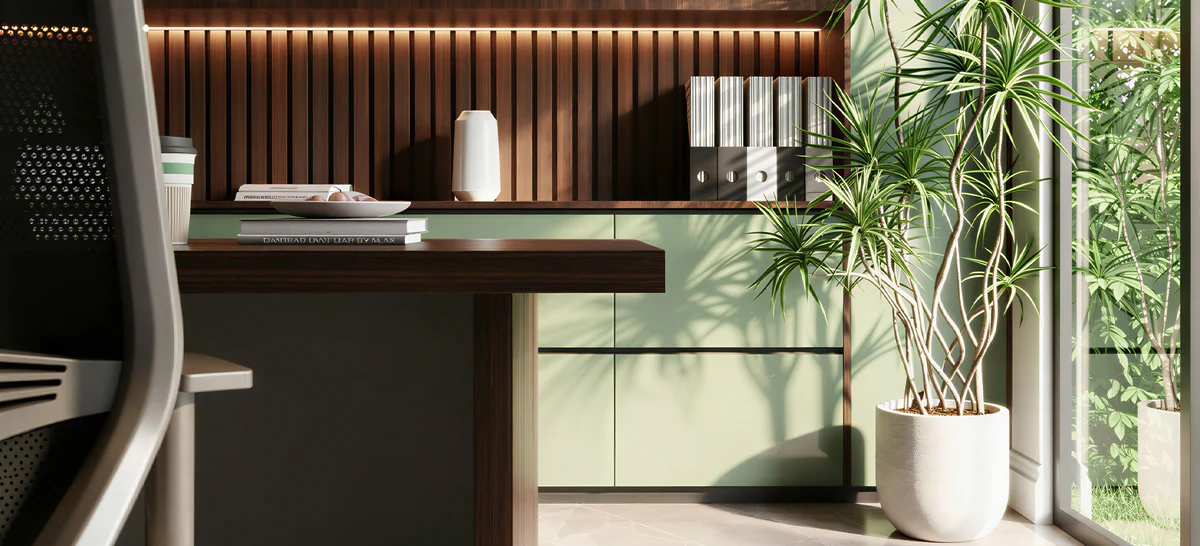
Built-in shelving makes a study feel like a room with history. Unlike freestanding bookcases, it runs wall to wall and floor to ceiling, uses every awkward corner and can wrap around a desk, a window or a doorway. Here’s how to plan one that works as well as it looks.
Shelf sizes
- Depth: 25–30cm suits most books. Deeper shelves, around 35–40cm, are better for files, boxes and large art books.
- Spacing: 30–35cm between shelves fits standard hardbacks; paperbacks need less, art and coffee-table books more.
- Span: long shelves can sag under heavy books. Keep spans moderate, or use thicker or reinforced shelves for long runs.
- Adjustability: a few adjustable shelves in each bay let the bookcase grow with your collection.
Open and closed storage
The most successful library walls mix open shelves with closed cupboards. Cupboards at the base, around desk height or a little lower, hide printers, files and everyday clutter, and give the design a solid foundation. Open shelves above show books and objects. The top of the cupboards becomes a useful surface for display or a printer.
Building in the desk
A desk set into the shelving makes the whole wall work as one piece of furniture. Shelves above the desk keep reference books within reach, and cable routes can run up through the joinery to the desk, so there’s nothing trailing behind it.
Plan for the things that aren’t books. Most collections include photos, plants, ceramics and keepsakes. Leaving a few wider or taller bays for display gives the wall rhythm and stops it feeling like a warehouse.
Lighting the shelves
LED strips set into the front edge or underside of each shelf light the books evenly and give the room a warm glow in the evening. Picture lights above the shelving add a classic library feel. On a dimmer, the bookcase can become the main source of light when you’re reading or relaxing rather than working.
Finishes
Walnut and oak feel warm and traditional, painted shelving can match the walls for a seamless look, and a darker colour makes books and objects stand out. Contrasting the inside back panels with the frame — a deep green behind oak, for example — adds depth.
Balance and styling
A library wall looks best with breathing space. Mix vertical rows of books with a few horizontal stacks, leave some shelves part-empty for objects, and repeat colours or materials across the wall so the eye moves calmly from one bay to the next.
Planned around your collection, a built-in bookcase becomes the heart of a study — practical every day and beautiful every evening.
Keep reading
-
 Home Offices
Home office design: how to build a workspace you’ll actually use
A good home office isn’t about an expensive desk. Light, storage and layout decide whether you work there every day — or drift back to the kitchen table.
4 min read Read article -
 Home Offices
No spare room? How to fit a real workspace into a small home
You don’t need a dedicated study to work well at home. How to turn a bedroom corner, alcove or landing into a workspace that closes away.
4 min read Read article -
 Home Offices
Lighting a home office: daylight, task light and no glare on screen
Bad lighting makes a home office tiring. How to use daylight, light the work in front of you and keep reflections off your screen.
4 min read Read article