Glass wardrobe doors: clear, tinted, fluted and frosted compared
Glass-fronted wardrobes turn everyday storage into a display — but they ask for a little more organisation. How the different glass types compare, and when to choose each one.
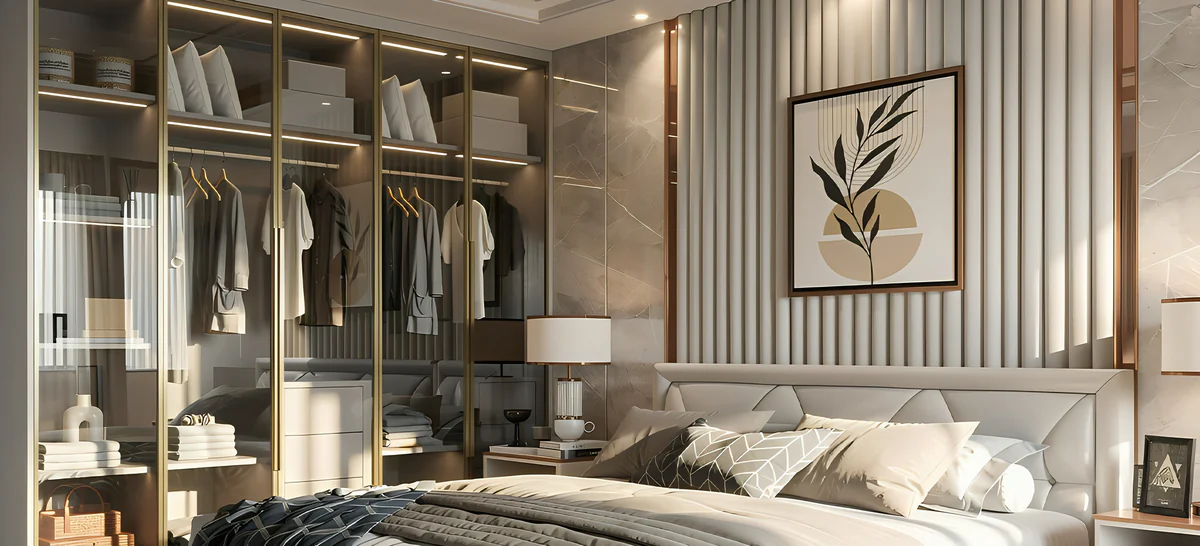
Glass doors bring a lightness to a bedroom that solid doors can’t. Lit from inside, a glass-fronted wardrobe glows softly in the evening and makes even a small room feel more open. The key is choosing the right type of glass for how you live.
Clear glass
Clear glass shows everything, like a boutique display. It suits people who enjoy keeping their clothes, shoes and bags neatly arranged — and who want to see what they own at a glance. It works especially well in walk-in wardrobes and dressing rooms, where the storage is the point of the room.
Tinted glass
Bronze, grey or smoked glass gives a little more privacy than clear glass while still showing shapes and colours behind it. When the internal lights are on, the contents glow through; when they’re off, the doors read as a rich, dark surface. It’s one of the most elegant options for a main bedroom.
Fluted and reeded glass
Fluted glass has fine vertical ribs that blur what’s behind it. It lets light pass through and gives a lovely texture, but hides the everyday mess of a busy wardrobe. It’s a good compromise if you love the look of glass but don’t want every shelf on show.
Frosted and satin glass
Frosted glass hides the contents almost completely while still feeling lighter than a solid door. It suits wardrobes in shared or children’s rooms, or sections that hold things you’d rather not display.
Mix your doors. Many of our glass wardrobes combine two types — clear glass for a lit display of bags and shoes, fluted or solid doors for everyday clothes. The wall looks considered, and the storage stays practical.
Frames and finishes
- Black frames feel crisp and contemporary.
- Bronze and champagne add warmth and suit soft, neutral bedrooms.
- Slim profiles keep the focus on the glass; wider frames look more traditional.
Lighting and safety
Internal lighting makes glass wardrobes come alive. LED strips along each shelf or in the frame uprights, switched by a sensor when the door opens or on a dimmer for evening glow, should be planned before the wardrobe is built. All glass doors should be toughened or laminated safety glass, and soft-close hinges or runners stop them catching.
Living with glass doors
Glass needs an occasional wipe, and the interior needs a little more organisation than a wardrobe behind solid doors. Matching hangers, folded stacks and a few display pieces make a big difference. In return, you get a wardrobe that feels like part of the room’s design rather than something to hide.
Choose the glass that suits how tidy you’d like to be, and a glass-fronted wardrobe can be the most beautiful piece of furniture in the bedroom.
Keep reading
-
 Bedrooms & Wardrobes
5 wardrobe planning mistakes that quietly waste your space
Most wardrobes fail on the inside, not the outside. Avoid these five common layout mistakes and you’ll fit more in — and actually find it again.
4 min read Read article -
 Bedrooms & Wardrobes
Sliding or hinged wardrobe doors? How to choose for your room
Doors decide how much floor a wardrobe needs and how easily you see inside. How sliding and hinged doors compare — and which suits your room.
4 min read Read article -
 Bedrooms & Wardrobes
Sloping ceilings, alcoves and eaves: fitted furniture for awkward bedrooms
Loft rooms, chimney breasts and sloping ceilings defeat freestanding furniture. How fitted storage turns awkward corners into the most useful part of a bedroom.
4 min read Read article