Choosing a built-in desk: size, height and materials for everyday comfort
You’ll spend more hours at your desk than at almost any other piece of furniture. How to get the size and height right, and choose a surface that looks good and wears well.
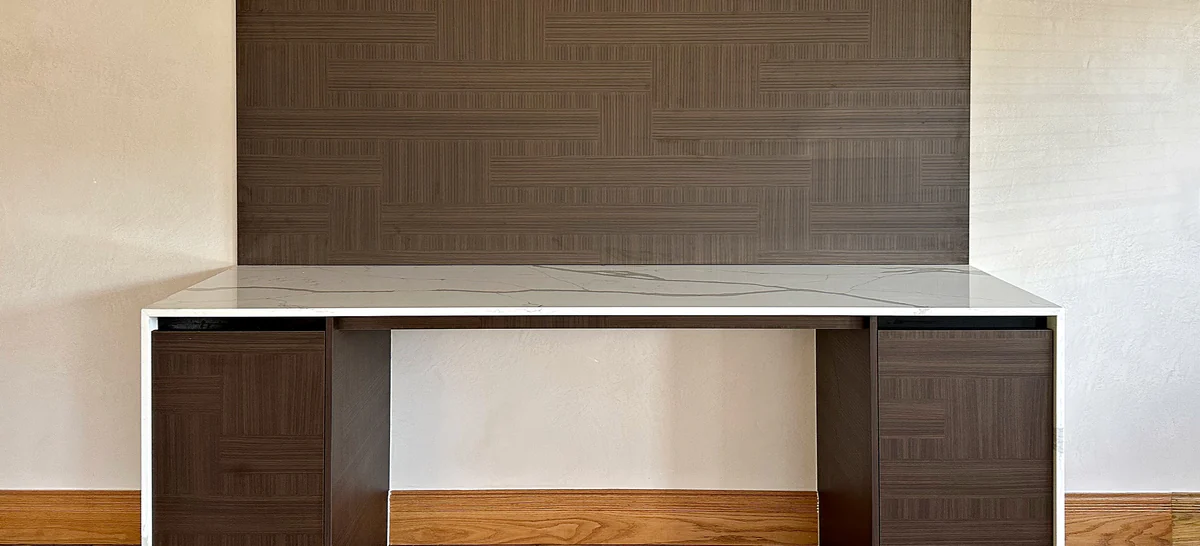
A desk built into the room can be exactly the size you need, fitted into an alcove, under a window or along a full wall. That freedom is the advantage — and it means a few decisions are worth getting right before it’s made.
Width and depth
For one person working with a laptop or a single monitor, allow at least 120cm of width; 150–180cm gives room to spread out papers. Two people working side by side need around 250cm or more. A depth of 60–70cm keeps a monitor at a comfortable distance; less than 55cm works for a laptop-only desk in a tight space.
Height and legroom
Most adults are comfortable at a desk around 72–75cm high, paired with an adjustable chair. Legroom is just as important: avoid drawers or rails directly under where you sit, and leave enough depth for your knees and a footrest if you need one. If several people of different heights will use the desk, or you like to stand for part of the day, a height-adjustable section can be built in.
Drawers and pedestals
Pedestals either side of the knee space give storage and support a long desktop without legs. A shallow drawer above the knee space is useful but reduces legroom, so it needs careful sizing. Filing drawers suit paperwork-heavy jobs; simple cupboards suit equipment.
Sit in the space first. Put a table and chair where the desk will go and work there for an afternoon. You’ll quickly find out whether you need more width, more light or a different position.
Surfaces that last
- Laminate: hardwearing, easy to clean and available in many colours and woodgrains.
- Wood veneer: warm and natural, with real grain; best with a durable lacquer.
- Solid timber: beautiful and repairable, though it needs a little care.
- Stone or compact surfaces: striking and very tough, cool to the touch, and perfect as a statement top.
Whatever you choose, a slightly rounded front edge is kinder to your wrists than a sharp one.
Making it part of the room
A desk feels most at home when it’s designed with the wall around it: a matching or contrasting panel behind, shelves above, cupboards either side. Carrying the same material across the desk and storage ties everything together, while a contrasting top — stone on timber, for example — makes it a feature.
Think ahead
Plan sockets and cable routes from the start, consider how the desk could be used if the room changes — a teenager’s study, a guest room — and choose finishes you won’t tire of.
A built-in desk sized to you and the room is one of the best investments in a home office. It’s comfortable every day and looks considered for years.
Keep reading
-
 Home Offices
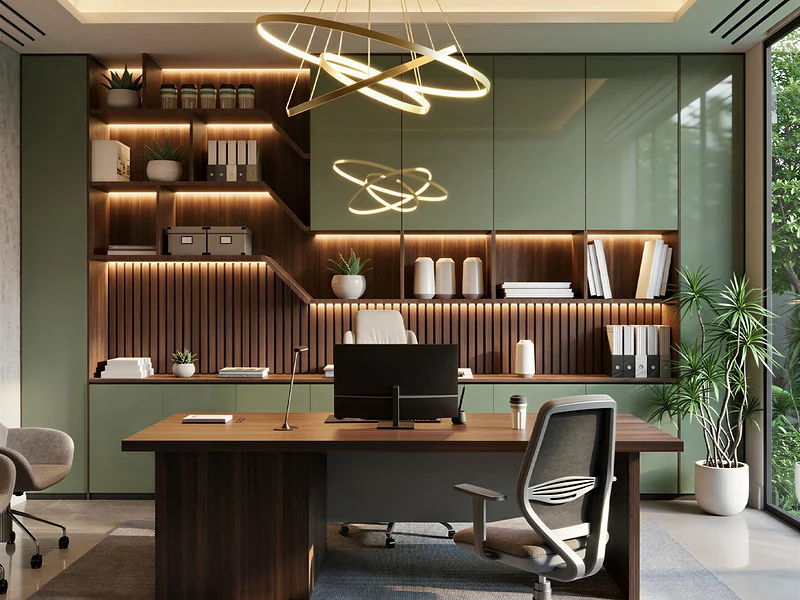
Home office design: how to build a workspace you’ll actually use
A good home office isn’t about an expensive desk. Light, storage and layout decide whether you work there every day — or drift back to the kitchen table.
4 min read Read article -
 Home Offices
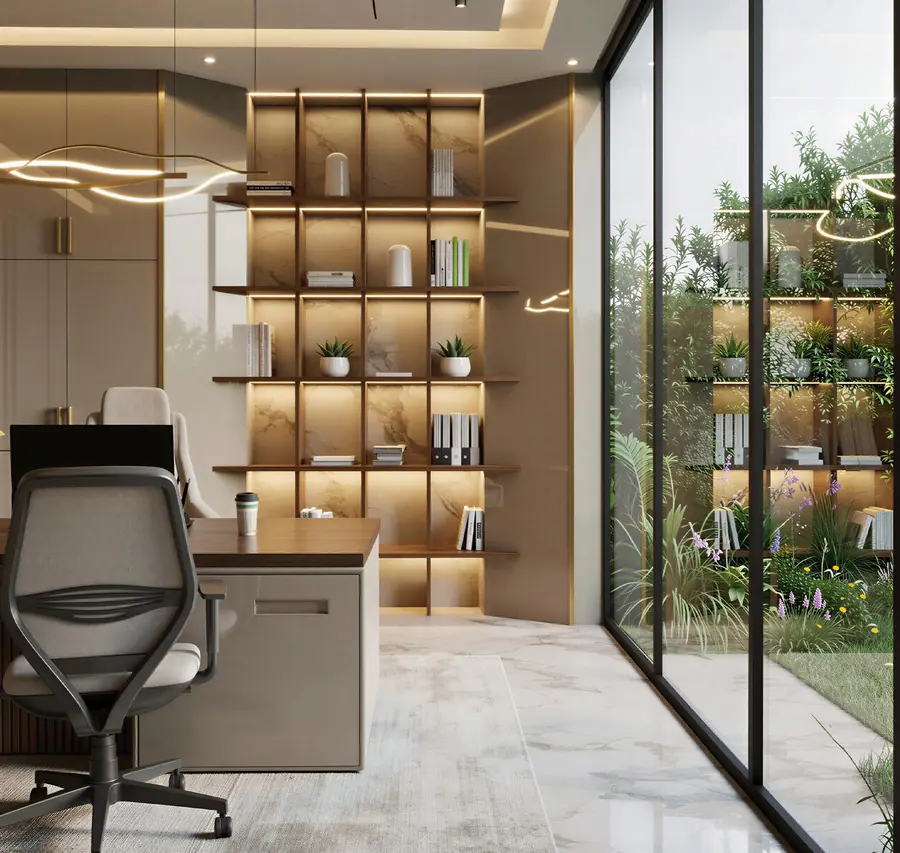
No spare room? How to fit a real workspace into a small home
You don’t need a dedicated study to work well at home. How to turn a bedroom corner, alcove or landing into a workspace that closes away.
4 min read Read article -
 Home Offices
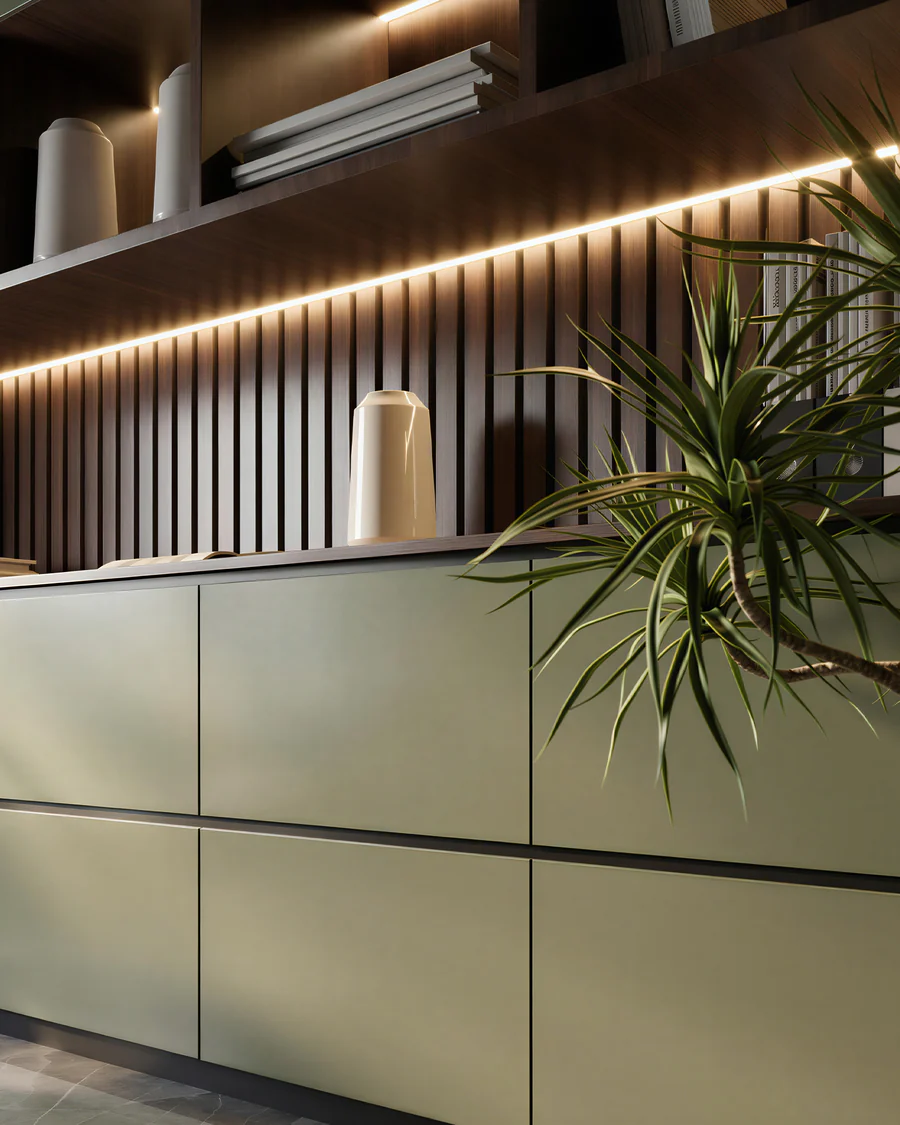
Lighting a home office: daylight, task light and no glare on screen
Bad lighting makes a home office tiring. How to use daylight, light the work in front of you and keep reflections off your screen.
4 min read Read article