Panelled, upholstered or lit: bedroom feature walls behind the bed
The wall behind the bed is the first thing you see as you walk into a bedroom. A built-in headboard wall can make the whole room feel calmer, richer and more complete.
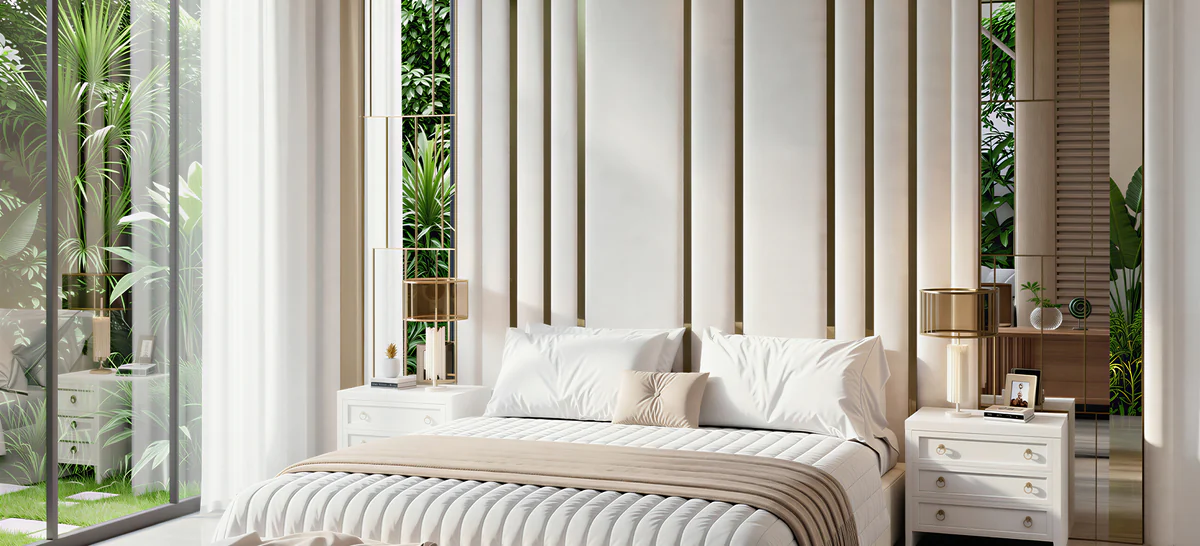
A bedroom feature wall isn’t just decoration. Designed well, it can replace the headboard, the bedside tables and the reading lamps in one piece of joinery — and give the whole room a sense of calm that loose furniture rarely achieves.
Panelling
Panelling is the most versatile option. Tall vertical panels or slatted timber draw the eye upwards and make the ceiling feel higher. Wider, flatter panels with fine shadow gaps give a quiet, hotel-like feel. Panels can be painted to match the walls for a subtle texture or finished in oak, walnut or a contrasting colour to become the focal point.
Upholstered walls
Fabric, velvet or leather panels set into the wall behind the bed are soft to lean against and absorb sound, so the room feels quieter. They can run the full width of the wall or sit as a generous headboard section framed by timber or painted panels either side. Channelled or quilted panels add depth; flat panels feel more contemporary.
Built-in bedsides and shelving
A feature wall can include floating bedside tables, shallow shelves for books and glasses, and small drawers for the things that usually clutter a bedside. Because they’re part of the wall, there are no legs to clean around, and they can be sized exactly to the space either side of the bed.
Plan the bed first. Decide the bed size, its height and where it will sit before the wall is designed. The headboard section, bedside shelves and lights all line up from there.
Lighting
- Reading lights set into the panels or hung either side, each on its own switch.
- A soft LED halo behind the headboard or along the top of the panelling for evening light.
- Lit niches or shelves for a warm, low glow.
- Switches at the bed, so you can turn everything off without getting up.
Proportions that work
A feature wall usually looks best when it runs the full height of the room or stops at a deliberate line, such as the height of the door frame. The headboard section should be wider than the bed itself — ideally to include the bedsides — so the bed feels anchored rather than floating.
Materials and finishes
Warm timbers, soft neutrals and a touch of brass or bronze create a calm, layered look. Darker colours feel cocooning in a large room, while pale finishes keep a small bedroom light. Whatever you choose, carry one material elsewhere in the room — on the wardrobe handles or a dressing table — so it all feels connected.
A well-designed bed wall makes a bedroom feel finished. It’s one of the simplest ways to add character and calm to the room you start and end every day in.
Keep reading
-
 Bedrooms & Wardrobes
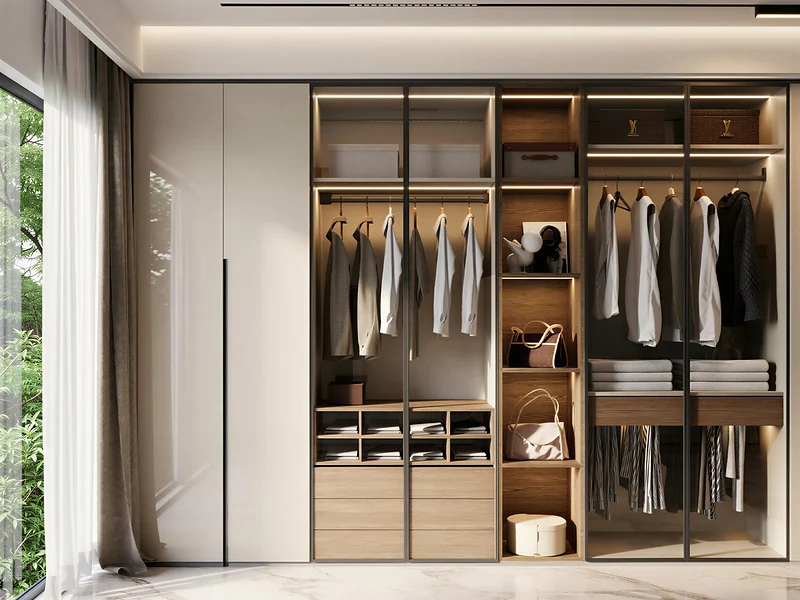
5 wardrobe planning mistakes that quietly waste your space
Most wardrobes fail on the inside, not the outside. Avoid these five common layout mistakes and you’ll fit more in — and actually find it again.
4 min read Read article -
 Bedrooms & Wardrobes
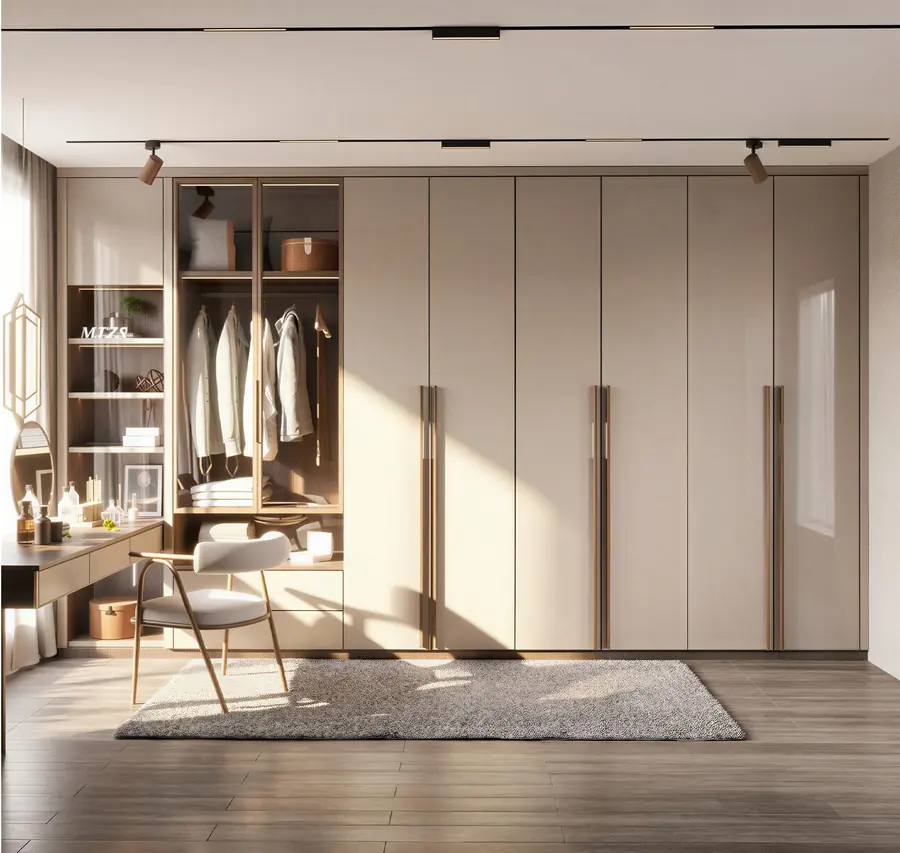
Sliding or hinged wardrobe doors? How to choose for your room
Doors decide how much floor a wardrobe needs and how easily you see inside. How sliding and hinged doors compare — and which suits your room.
4 min read Read article -
 Bedrooms & Wardrobes
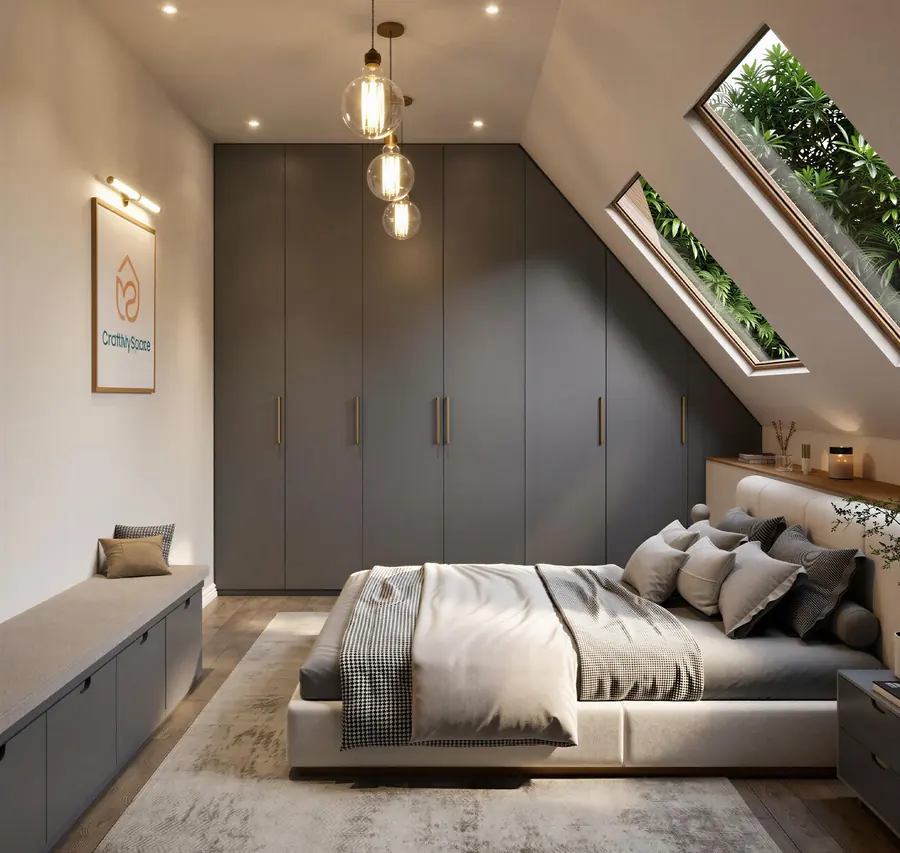
Sloping ceilings, alcoves and eaves: fitted furniture for awkward bedrooms
Loft rooms, chimney breasts and sloping ceilings defeat freestanding furniture. How fitted storage turns awkward corners into the most useful part of a bedroom.
4 min read Read article